
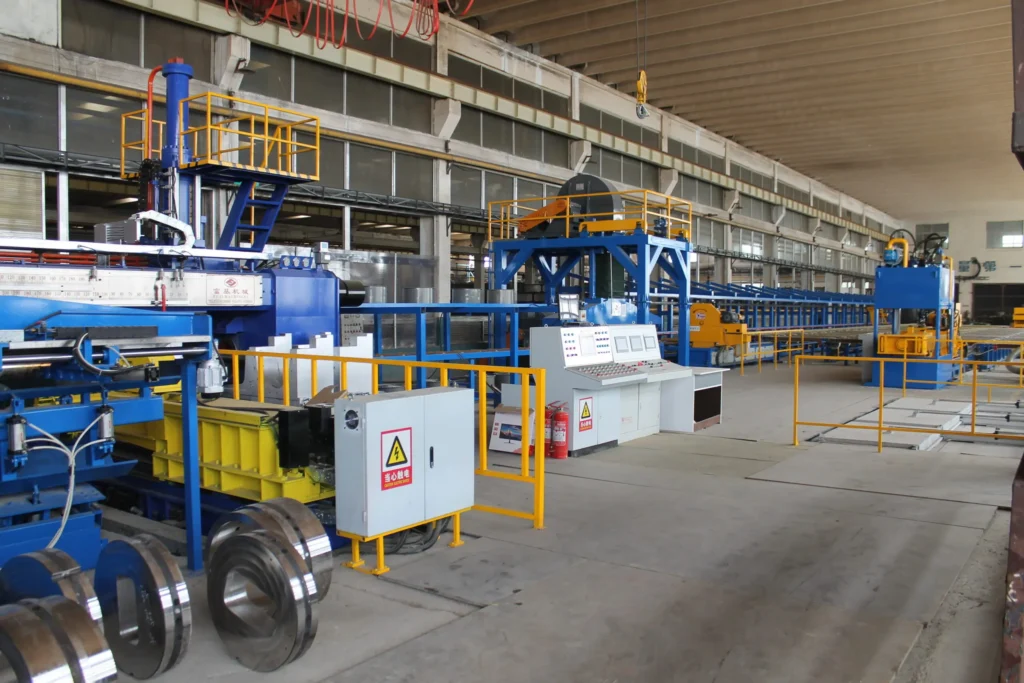
Aluminum extrusion is a manufacturing process where aluminum alloy is forced through a shaped die to produce profiles with specific cross-sections. This technique enables the creation of lightweight, durable, and versatile components widely used in industries like construction, automotive, and aerospace.
Working Principle
Aluminum extrusion begins by heating an aluminum billet to a temperature suitable for deformation. The softened billet is then pushed through a die using hydraulic pressure, taking the die’s shape as it exits. The extruded profiles are cooled, stretched, and cut to desired lengths. This process is ideal for creating complex shapes with high precision and consistency.
Key Features of Aluminum Extrusion
| Feature | Description |
|---|---|
| Versatility | Customizable designs for various applications. |
| Lightweight | Reduces structural weight without compromising strength. |
| Durability | Resistant to corrosion and wear. |
| Sustainability | 100% recyclable material. |
Yoverd Aluminium Pro Tip: In our lab tests at Yoverd Aluminium, we found that optimizing die lubrication significantly improves extrusion speed and surface finish, reducing production costs.
What is aluminum extrusion scrap?
Aluminum extrusion scrap refers to leftover or waste materials from the extrusion process, such as trimmed ends, defective profiles, or excess aluminum. These scraps are recyclable and often melted down to produce new billets or other aluminum products.
Recycling Process
- Collection: Scrap is gathered from production lines.
- Sorting: Materials are separated by alloy type.
- Melting: Scrap is melted in a furnace to create new aluminum stock.
- Casting: Recast into billets for future extrusion.
Yoverd Aluminium Pro Tip: Our technicians recommend pre-sorting scrap by alloy to minimize contamination during recycling and maximize recovery rates.
What’s the difference between extruded aluminum and cast aluminum?
Extruded aluminum is formed by forcing aluminum through a die, creating profiles with consistent cross-sections, while cast aluminum is formed by pouring molten aluminum into molds for complex shapes.
Comparison Table
| Property | Extruded Aluminum | Cast Aluminum |
|---|---|---|
| Process | Mechanical extrusion | Molten metal casting |
| Complexity | Limited shapes | Intricate designs possible |
| Strength | Higher tensile strength | Lower compared to extrusion |
Yoverd Aluminium Pro Tip: Our team frequently uses extruded aluminum in structural applications due to its superior strength-to-weight ratio compared to cast aluminum.
What are the disadvantages of aluminum extrusion?
While aluminum extrusion offers versatility and efficiency, disadvantages include limited shape complexity, high initial setup costs for custom dies, and potential for surface imperfections.
Considerations
- Die Limitations: Complex shapes may require alternative processes like casting.
- Initial Investment: Custom dies can be expensive for small-scale production.
- Surface Defects: Improper cooling or lubrication may result in imperfections.
Yoverd Aluminium Pro Tip: We recommend regular die maintenance and quality control checks to minimize surface defects and ensure consistent output.
Is aluminum extrusion expensive?
Aluminum extrusion can be costly initially due to die manufacturing and setup, but its efficiency and recyclability often reduce long-term costs, especially for large-scale production.
Cost Breakdown
- Die Creation: Single-time investment for custom profiles.
- Material Costs: Aluminum is lightweight and cost-effective.
- Production Efficiency: High throughput reduces per-unit costs.
Yoverd Aluminium Pro Tip: At Yoverd Aluminium, we advise bulk ordering to distribute die costs and achieve better pricing efficiency.
What are the wholesale pricing options for aluminum extrusion products?
Wholesale pricing for aluminum extrusion products depends on factors like alloy type, profile complexity, and order volume, with discounts often applied for bulk purchases.
Pricing Factors
| Factor | Impact on Cost |
|---|---|
| Alloy | Premium alloys cost more. |
| Profile Complexity | Intricate designs require higher tooling costs. |
| Order Volume | Larger orders typically reduce unit pricing. |
Yoverd Aluminium Pro Tip: Our pricing models at Yoverd Aluminium are tailored to your project’s needs. Reach out for custom quotes.
Can you explain the key benefits of aluminum extrusion for industrial applications?
Aluminum extrusion offers lightweight, durable, and corrosion-resistant profiles that can be customized for various industrial applications, enhancing efficiency and reducing material waste.
Application Benefits
- Construction: Lightweight beams and panels reduce building loads.
- Automotive: Improves fuel efficiency with reduced vehicle weight.
- Aerospace: High strength-to-weight ratio meets strict performance standards.
Yoverd Aluminium Pro Tip: Our custom extrusion solutions for industrial applications have consistently reduced manufacturing costs by up to 20%.
Conclusion
Aluminum extrusion is a versatile and sustainable manufacturing process widely used across industries due to its efficiency, adaptability, and cost-effectiveness. For more information on aluminum extrusion, you can explore this Wikipedia article on Aluminum Extrusion, or learn about the properties of Aluminum Alloys. Additionally, you can read about the Recycling Process to understand how aluminum scrap is reused effectively.