
Anodizing aluminum turns the surface of a profile into a dense aluminum oxide layer. The layer is created electrochemically from the aluminum itself, not applied as a separate paint film. It can remain clear or be colored, and it is then sealed to improve corrosion resistance and durability.
For buyers and engineers, the word “anodized” is not a complete specification. Type, coating thickness, alloy, surface preparation, color method, sealing quality, and the service environment all affect the result. This guide explains those choices and shows how to write a clearer purchase order for architectural and industrial aluminum profiles.
What Anodizing Does to an Aluminum Surface
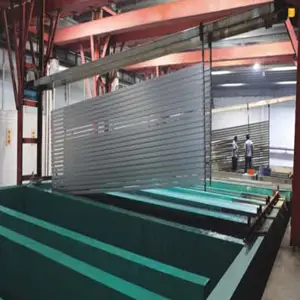
In the anodizing process, prepared aluminum profiles are immersed in an acid electrolyte bath and connected as the anode. Electrical current releases oxygen ions at the aluminum surface, where they combine with aluminum atoms to form an aluminum oxide layer integrated with the base metal. The Aluminum Extruders Council explains that this oxide layer is hard, corrosion resistant, and unable to chip or peel like an applied coating.
The oxide layer is also porous during processing. Those pores allow dyes or metallic color deposits to enter the coating. A final sealing step closes and stabilizes the structure so the finish is less likely to stain or corrode.
Anodizing does not cover or correct substrate defects. Alloy composition, extrusion die lines, polishing marks, scratches, and surface contamination can remain visible. This is why the quality of the extrusion and the quality of the anodizing line must be considered together. The same principle applies after any aluminum extrusion process: establish the surface requirements before production, not after the profiles have been finished.
Type I, Type II and Type III Hard Anodizing
Type names describe the electrolyte or intended performance, but they do not by themselves establish a sufficient coating thickness. The purchase specification should name both the process and the required coating class or thickness.
| Type | Typical process | Typical thickness | Best-fit use |
|---|---|---|---|
| Type I | Chromic acid anodizing | About 0.03–0.10 mil (0.75–2.5 µm) | Corrosion protection where a thin coating is preferred, including aerospace and military work |
| Type II | Sulfuric acid anodizing | Commonly 0.1–1.0 mil (about 2.5–25 µm), depending on class | General protective, decorative, and architectural finishes |
| Type III | Hard anodizing, sometimes called hardcoat | 1.0–5.0 mil (about 25–125 µm) or more | Wear resistance, sliding parts, valves, cams, and other engineering applications |
The Type I, Type II, and Type III convention is commonly associated with the MIL-A-8625 and MIL-PRF-8625 family of specifications. Sulfuric acid anodizing is the predominant commercial process, while hard anodizing is selected when abrasion or wear resistance is the primary requirement. Hardcoat layers are often left unsealed because sealing can reduce coating hardness, although the final treatment depends on the application and governing specification. The AAC current process guide and Qualanod hard-anodizing overview provide useful background.
For exterior architectural profiles, Type II sulfuric acid anodizing is more common. For a machine component that rubs or slides, Type III may be more appropriate. A supplier should confirm that the selected alloy, profile geometry, and anodizing process can meet the requested thickness and appearance.
Coating Thickness and What It Means Outdoors
Thickness is one of the strongest indicators of an anodic coating’s durability, but it is not the only one. Coating density, sealing quality, alloy, coloring method, exposure, cleaning, and maintenance also affect service life.
The AAC uses several historic architectural classes:
| AAC class | Coating thickness | General guidance |
|---|---|---|
| Protective and Decorative | Less than 0.4 mil (under 10 µm) | Suitable for some indoor, bright, or limited-protection uses, but not recommended for architectural exposure |
| Architectural Class II | 0.4–0.7 mil (about 10–17.5 µm) | Recommended for interior architectural use and outdoor use with regular maintenance |
| Architectural Class I | 0.7 mil and above (about 17.5 µm and above) | Intended primarily for exterior building products and other continuous outdoor exposure |
The AAC gives exterior curtain wall, window, and door frames as examples of Class I work and notes that these finishes commonly fall in the 0.7–1.2 mil range, or about 17.5–30 µm. For marine products, it lists a similar range. These figures are starting points for the specification, not a universal warranty period.
Qualanod, a European quality-label organization for anodized aluminum, reports outdoor exposure studies in which 10–25 µm architectural coatings lost roughly 0.2–0.4 µm per year in urban environments. Marine loss was similar or slightly lower, while rural loss was negligible. A heavily polluted industrial site reached about 1.2 µm per year. Those measurements help explain why a coastal, industrial, or heavily cleaned facade may need a more demanding specification than a protected indoor profile. They should not be converted into a guaranteed service life because real performance varies by environment and maintenance.
A thicker coating can also change appearance. It usually produces a more matte surface and makes dark colors easier to achieve. If the project requires a specific gloss, texture, or color, approve a physical sample under the intended lighting rather than relying on a thickness number alone. For residential or commercial window systems, finish performance should be reviewed together with the thermal break window and door profiles and the complete assembly design.
Clear, Bronze and Color Anodizing
Anodized aluminum can be clear or colored, but the coloring method affects color range and lightfastness.
Clear anodizing produces a transparent or translucent oxide layer. The metallic appearance comes from the aluminum alloy and surface preparation. Clear finishes are common on architectural and industrial profiles because they retain the natural metal character.
Integral coloring forms color during anodizing in a mixed electrolyte. It can produce champagne, bronze, gray, slate, and black tones. The color is part of the oxide structure and is known for strong weathering performance, but integral coloring has become less common because it can be more expensive to produce.
Electrolytic coloring first forms a clear anodic layer, then deposits metallic salts such as tin, nickel, or cobalt at the base of the pores. It is widely used for light bronze, dark bronze, and black architectural finishes. The AAC finish specification guidance notes that the color depends on the deposited metal and the amount of deposit.
Organic dye coloring offers a wider range of colors, including red, blue, green, and black. Not all organic dyes are equally lightfast. Thicker coatings can hold more dye and may improve fade resistance, but the dye chemistry, coating thickness, sealing, and exposure still matter.
Bronze and dark bronze profiles are popular because they reduce the bright metallic appearance of aluminum while preserving a metal finish. Even so, color consistency should be controlled with an approved sample and a defined measurement method. Large panels or profiles installed close together can reveal small differences that are not obvious in individual samples.
Anodizing vs Powder Coating vs Wet Paint
Anodizing, powder coating, and liquid coatings are all valid finishes, but they solve different problems.
| Finish | How it works | Appearance and color | Repair and maintenance considerations |
|---|---|---|---|
| Anodizing | Electrochemically grows an oxide layer from the aluminum | Metallic, translucent, or colored; usually a narrower organic color range | Very hard and integral to the metal; field repair and color touch-up are difficult |
| Powder coating | Electrostatic powder is cured into a polymer film | Broad color, gloss, and texture range | Can chip at damaged edges; touch-up may be visible |
| Wet paint or PVDF system | Liquid coating is applied and cured | Broad color range and finish options | Performance depends on the resin system, preparation, film thickness, and application quality |
The choice should follow the exposure and maintenance plan. Anodizing is often chosen when a metallic appearance, hard surface, and integral oxide layer are important. Powder or liquid coatings may be preferred when a specific color match, low-gloss texture, or broader color range is required. Compare the complete specification, not just the finish name.
Sealing Quality and How to Check It
Sealing closes the porous anodic structure and is critical for corrosion resistance, stain resistance, and color retention. The correct sealing method and acceptance criteria depend on the anodizing type and the governing specification.
A practical inspection plan may include:
- Coating thickness or coating weight, measured by an agreed method
- Sealing quality, using the specified acid-dissolution, dye-stain, or impedance test
- Color and gloss against an approved sample
- Visual inspection for streaks, patchy color, burns, pits, scratches, and handling marks
- Corrosion or weathering tests when the service environment requires them
- Abrasion and wear tests for hard-anodized engineering parts
- Dimensional checks where the oxide layer affects fit
The AAC quality assurance guidance lists thickness, uniformity, density, abrasion resistance, corrosion resistance, fade resistance, reflectivity, adhesion, and sealing among the relevant quality criteria. The test method and acceptance limit should be written into the purchase order. A certificate that says only “anodized” is not enough for a critical architectural or industrial application.
Dimensions also need attention. Anodizing creates a surface layer and can affect threads, bores, mating surfaces, and tight fits. State whether critical dimensions apply before or after finishing, and identify areas that must be masked. If the finish is part of a controlled assembly, review the quality control process and the inspection plan before releasing production.
Specifying Anodized Profiles in a Purchase Order
A clear anodizing specification should tell the supplier exactly what will be judged at inspection. Include:
- Alloy and temper.
- Anodizing type and governing standard.
- Coating class or minimum average thickness.
- Surface preparation and texture, such as mill, etched, brushed, polished, or bright.
- Color system: clear, integral, electrolytic, or dyed.
- Approved color sample and measurement method.
- Sealing method and acceptance test.
- Indoor, outdoor, marine, industrial, or high-wear service conditions.
- Masking requirements and whether dimensions apply before or after anodizing.
- Sampling, test reports, traceability, packaging, and handling requirements.
An example specification clause could read:
6063-T5 extrusion; sulfuric acid anodized; minimum 20 µm average coating thickness; electrolytically colored dark bronze; sealed; color to match the approved sample; thickness and sealing verified by the named test methods; critical dimensions apply after anodizing.
This clause is only an example. The required thickness, color method, and test limits must be selected for the project. An experienced finisher can also flag risks such as difficult alloys, narrow color tolerances, deep recesses, or dimensions that may change during processing. For custom geometries, review the custom aluminum extrusion profiles early so the profile design and finish requirements are compatible.
FAQ
How thick should anodizing be for outdoor use?
For continuous exterior architectural exposure, the AAC’s Architectural Class I begins at 0.7 mil, about 17.5 µm. Qualanod’s architectural guidance discusses coatings commonly in the 10–25 µm range and shows that environment and maintenance affect thickness loss. A coastal or polluted project may require a thicker or more tightly controlled finish than a protected inland project. Follow the project specification rather than using one thickness for every outdoor application.
Should I choose Type II or Type III anodizing?
Choose Type II sulfuric acid anodizing for most decorative, protective, and architectural profiles. Choose Type III hard anodizing when wear resistance or surface hardness is the primary requirement. Type III coatings are generally thicker and more abrasion resistant, but they can be less suitable where appearance, color range, or tight dimensional control is the main concern.
Is clear anodizing more durable than colored anodizing?
Clear anodizing does not contain an organic dye that can fade, but it still depends on coating thickness, density, sealing, and the base alloy. Colored finishes can perform well for decades when the process is appropriate. Electrolytic bronze colors are commonly used in architecture; organic dyes require more attention to lightfastness and approved color standards.
Does anodizing peel or flake?
The anodic oxide layer is formed from the aluminum surface and is integrated with the base metal, so it does not peel like paint. It can still be scratched, abraded, stained, or worn through under severe service. Good sealing and an appropriate coating thickness reduce those risks.
Next Step: Specify the Finish Before Production
Anodizing aluminum works best when the finish is treated as an engineering requirement. Confirm the alloy, process type, coating thickness, color method, sealing, inspection, and exposure conditions before the first production run. This reduces disputes over appearance and helps the finished profile meet its expected service life.
Review architectural aluminum extrusion profiles for building systems or industrial aluminum extrusion profiles for equipment and structural applications. When the drawings are ready, contact our team to discuss alloy, anodizing type, color, thickness, and inspection requirements for your project.