


Aluminum tubing is not one product. It is a family of hollow extruded sections — round, square, rectangular, oval or fully custom — that can be produced in different alloys, tempers, wall thicknesses, finishes and tolerances. For engineers and buyers, the practical question is not simply “What size tube do I need?” but “Which combination of section, alloy, temper, standard and manufacturing route will work in this application?”
This guide breaks the selection into the decisions that most often affect performance, cost and delivery.
What Counts as Aluminum Tubing?
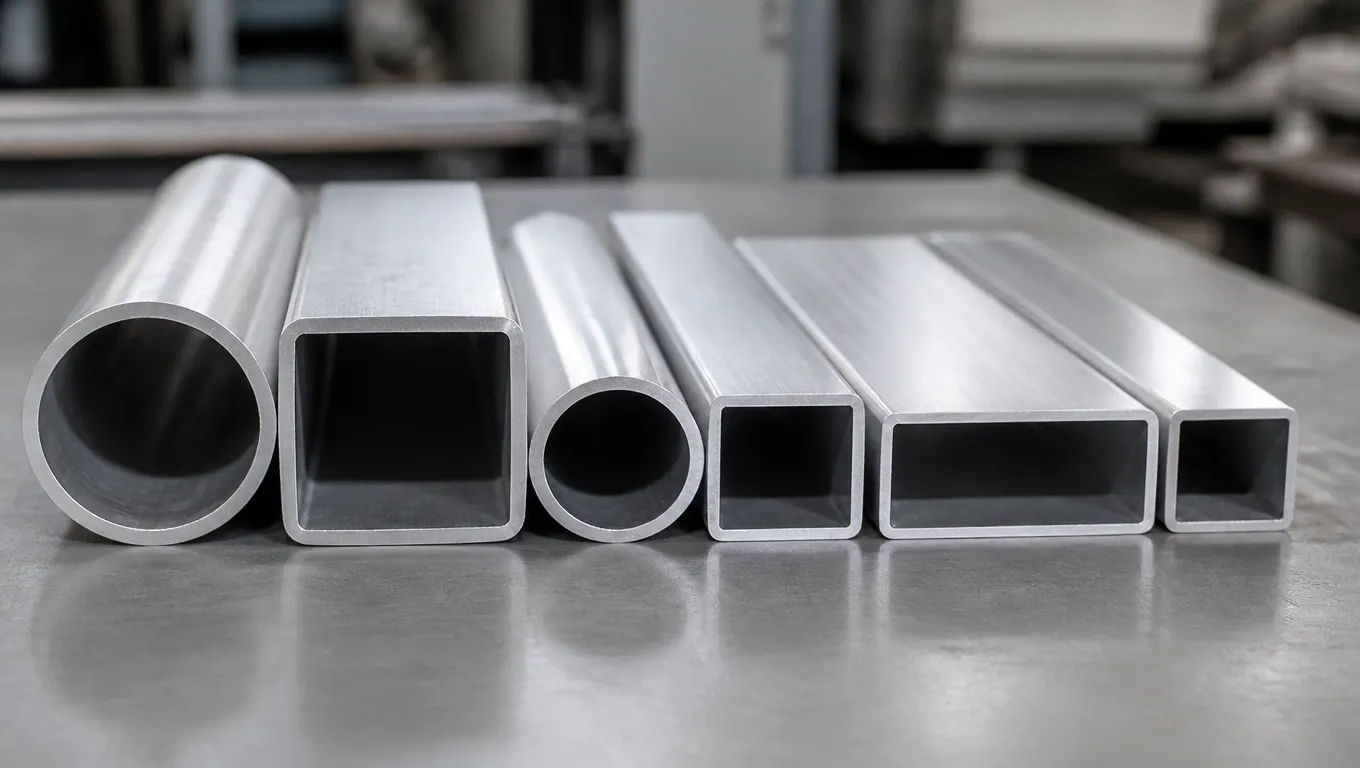
In general industrial use, aluminum tubing refers to a hollow aluminum profile with a defined outer dimension, wall thickness and length. The term can cover round tube, square tube, rectangular tube and custom hollow profiles. Some industries also use pipe for round sections produced to a standard dimension schedule, while tube is more often used for structural, architectural and mechanical applications.
Two ASTM standards help separate the categories:
- ASTM B221/B221M covers aluminum and aluminum-alloy extruded bars, rods, wires, profiles and tubes. ASTM notes that pipe and tube products in this specification are intended for general-purpose applications, and that pressure or fluid-carrying applications may require other specifications such as B210 or B241.
- ASTM B241/B241M covers aluminum and aluminum-alloy seamless pipe and seamless extruded tube intended for pressure applications. It also describes production from hollow extrusion ingot, or drilled or pierced solid ingot, using a die and mandrel method.
That distinction matters. A tube used as a machine-frame rail is not automatically suitable for a pressure line. Always match the product form to the actual service condition and governing standard.
Cross-Sections: Round, Square and Rectangular
The cross-section is often the first practical decision because it determines how the tube carries load, joins to other parts and looks in the final product.
| Section | Best suited for | Why buyers choose it | Points to check |
|---|---|---|---|
| Round tube | Railings, frames, fluid or cable passages, general structural parts | Even geometry around the circumference; clean appearance; easy to bend or rotate | OD, wall thickness, ovality, straightness and bend radius |
| Square tube | Machine frames, guards, furniture, display systems, modular structures | Flat faces simplify joining, clamping and panel mounting | corner radii, wall thickness, twist and flatness |
| Rectangular tube | Beams, posts, slats, frames where one axis needs more depth | Different width and height can improve stiffness in one direction | orientation of load, welding or fastening method, surface finish |
| Custom hollow profile | Products that integrate mounting slots, holes, ribs or fixings | One extrusion can replace several assembled parts | die feasibility, minimum wall, tolerance and secondary machining |
Round tube is often selected when appearance and uniform stress distribution matter. Square and rectangular tubes are preferred when flat mounting surfaces or directional stiffness are more important. For example, Yoverd’s custom aluminum round tube extrusions are used for industrial structures, architectural systems, transportation equipment, furniture and mechanical assemblies, while the rectangular aluminum tube page highlights structural support and controlled tolerances.
The section shape should follow the load path and assembly method. Do not choose a shape only because it is easier to source.
Alloys and Tempers for Tubing
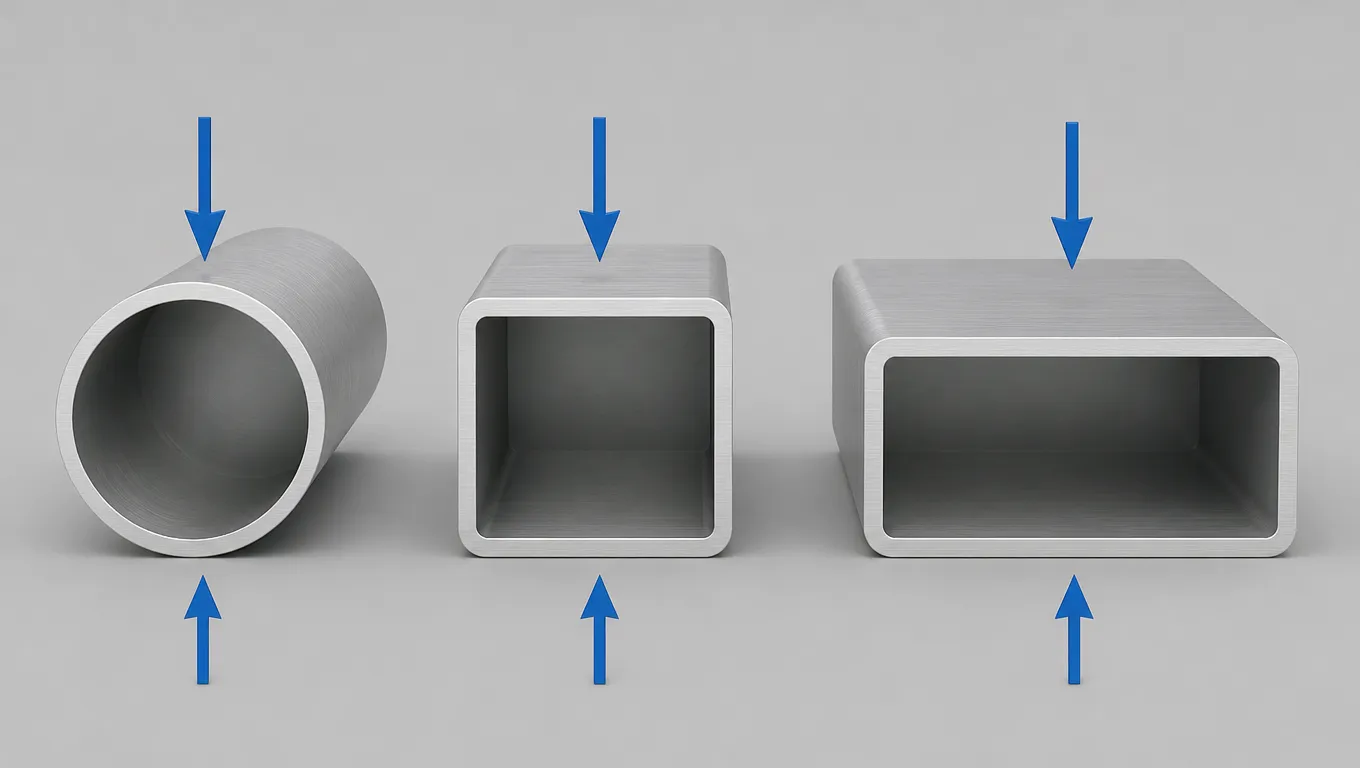
Most aluminum tubing for structural, architectural and industrial use comes from the 6xxx series, which combines magnesium and silicon. The Aluminum Extruders Council describes 6xxx alloys as the most popular extrusion alloy class, with good strength, corrosion resistance, machinability, weldability and heat-treatability.
For tubing, the two most common choices are:
- 6061 aluminum: often selected where higher strength, machining performance or structural performance is required.
- 6063 aluminum: often selected for architectural profiles, intricate sections and parts where surface finish and anodizing quality matter.
Temper changes the answer. A tube marked 6061 is incomplete; the useful specification is 6061-T6, 6063-T5, 6063-T6, or another required condition. In the AEC explanation, T5 means the material is cooled from an elevated temperature and artificially aged, while T6 means it is solution heat-treated and artificially aged.
| Requirement | Common first choice | Reason |
|---|---|---|
| Higher-strength structural tube | 6061-T6 | Better typical structural performance for many load-bearing applications |
| Architectural or decorative tube | 6063-T5 or T6 | Good extrudability, surface quality and anodizing response |
| Complex custom hollow profile | 6063, subject to die review | Generally easier to extrude intricate sections |
| Extensive machining | 6061-T6 | Often preferred when strength and machinability are both important |
| Color-critical anodizing | 6063 or approved sample | Alloy chemistry and surface condition affect final appearance |
For a deeper alloy comparison, see our guide to 6061 vs 6063 aluminum. NIST also publishes property data for 6061-T6 aluminum, but published typical values should never replace the governing standard, material certificate and finished-part validation.
Wall Thickness, Weight and Load
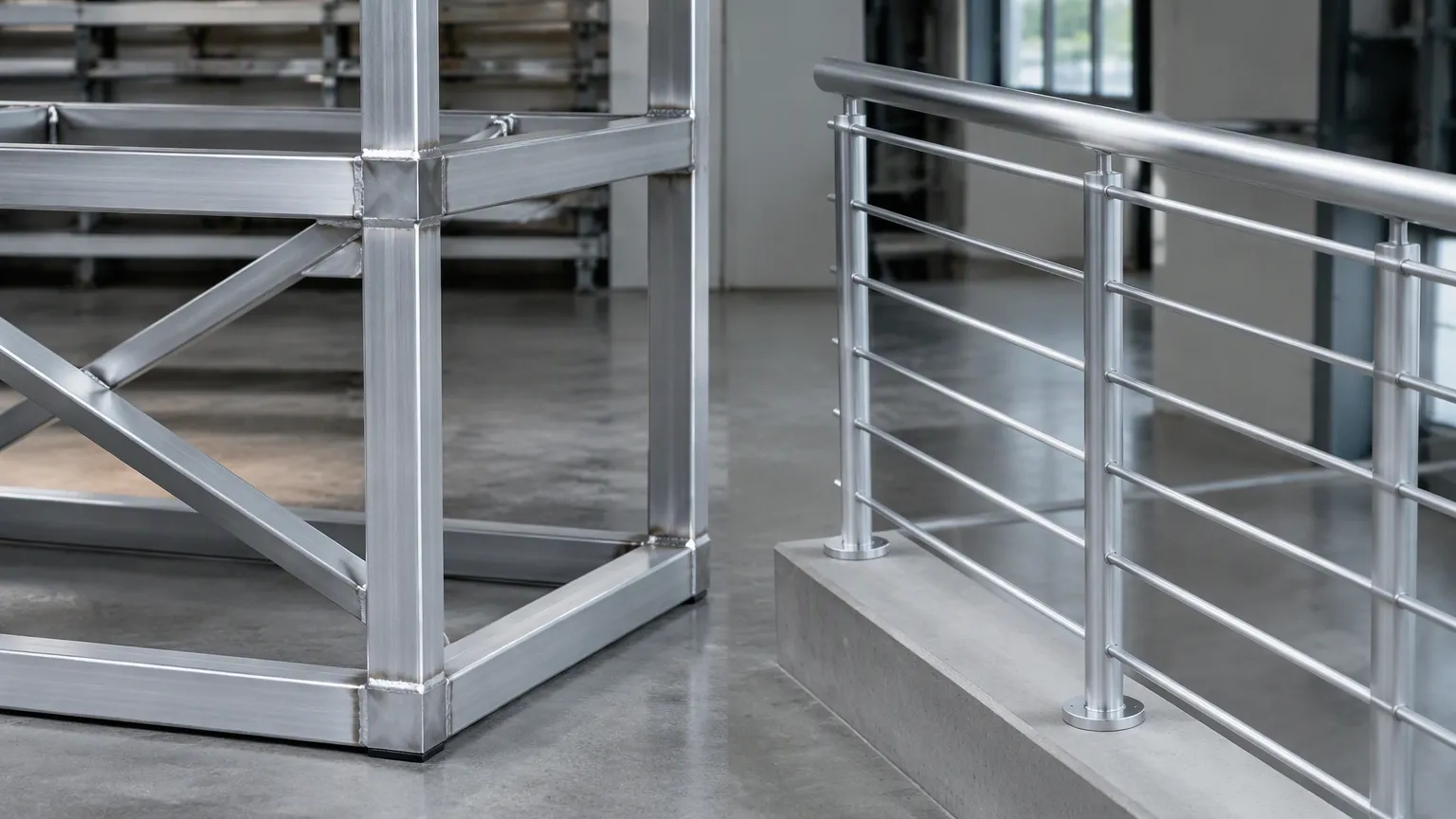
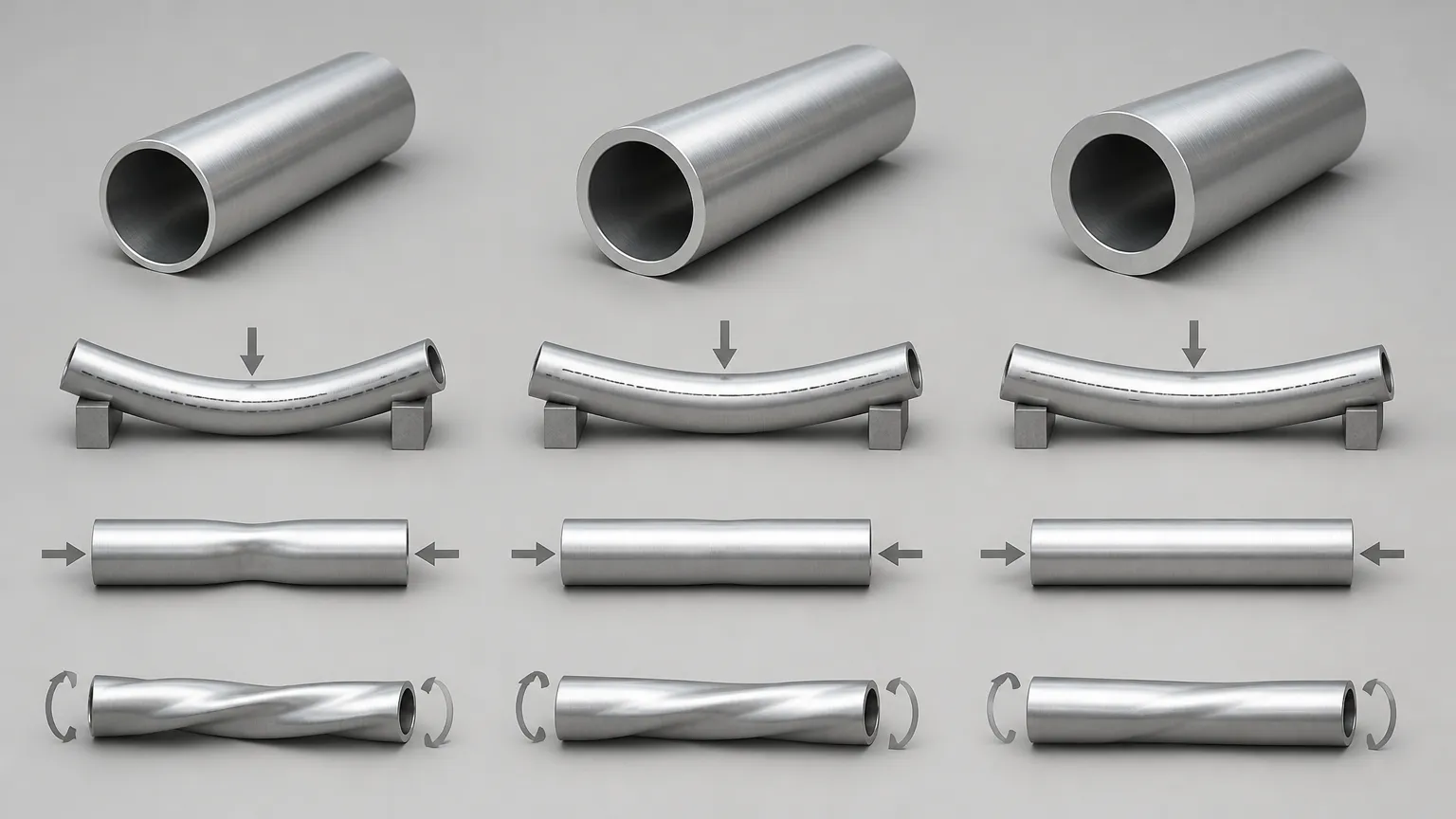
Wall thickness is one of the most important variables because it affects weight, stiffness, buckling resistance, weldability, machining allowance and cost. A thicker wall is not automatically better. If the wall is too thin, the tube may dent, buckle or distort during machining. If the wall is too thick, the part becomes heavier and more expensive than necessary.
Use these questions to define the wall:
- What load does the tube carry? Bending, torsion, compression and impact behave differently.
- How is the tube supported? A simply supported rail and a cantilevered arm need different sections.
- Will the tube be welded or machined? Machining and welding may require extra wall or specific temper considerations.
- What tolerances are required? A visible architectural part may need stricter straightness, twist or surface control than a hidden industrial frame.
- What finish will be applied? Anodizing, powder coating, PVDF and polishing can change appearance and dimensional control requirements.
Yoverd’s product pages list customized outer diameter, wall thickness and length for round tube, and customized wall thickness for rectangular tube. The aluminum tubes product page also describes on-site inspection, pre-shipment inspection and testing-machine verification. Those controls matter because a tube that meets the alloy grade can still fail if wall variation, straightness or surface condition is outside the assembly requirement.
For custom hollow profiles, the custom aluminum extrusion profiles page lists 6000-series material, customized shape and length, wall thickness to customer requirements, and a dimensional tolerance of ±0.1 mm or as required. The exact tolerance should still be confirmed against the drawing, alloy and section complexity.
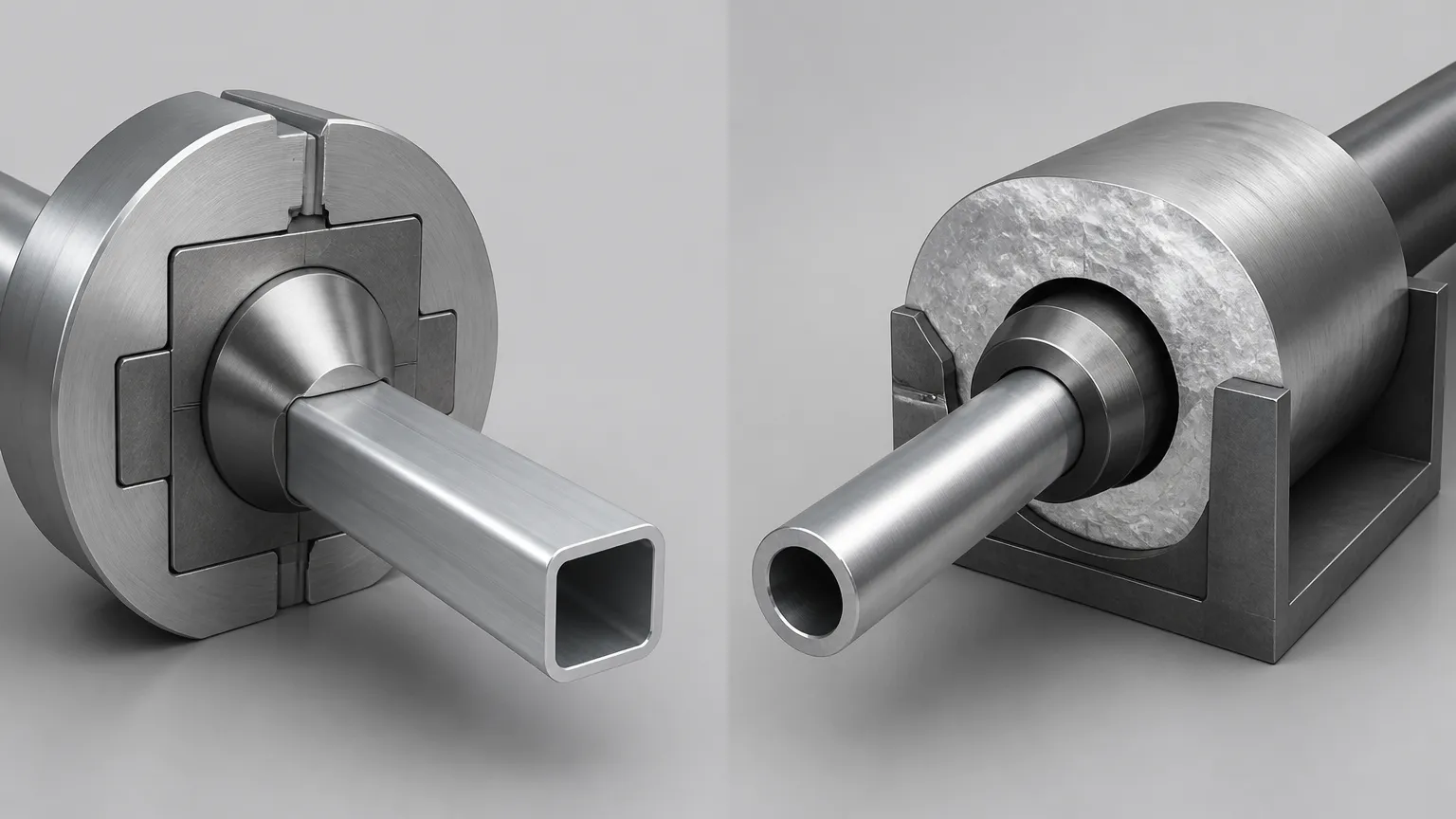
Extruded vs Seamless Tube
Most architectural and structural aluminum tube is extruded. In the extrusion process, heated aluminum is forced through a die to form the required cross-section. The Aluminum Extruders Council describes this as a process that forms a profile from an aluminum billet, after which the extrusion can be finished, fabricated or packaged.
Seamless tube or pipe is different. ASTM B241 describes seamless pipe and seamless extruded tube produced from hollow extrusion ingot, or from drilled or pierced solid ingot, using a die and mandrel method. This route is used when the application involves pressure or requires a seamless product form.
| Item | Extruded tube | Seamless pipe/tube |
|---|---|---|
| Typical use | Structural, architectural, mechanical and decorative applications | Pressure applications and fluid-carrying systems where a seam is not acceptable |
| Common standard reference | ASTM B221/B221M for general extruded tubes | ASTM B241/B241M for seamless pipe and seamless extruded tube |
| Key benefit | Design flexibility for custom sections | Seamless wall for pressure integrity |
| Key check | Dimensional tolerance, wall consistency, straightness, finish | Pressure rating, test requirements, material certification and applicable code |
If the application is a guardrail, machine frame or furniture tube, extruded tube is usually the correct starting point. If the tube will carry pressure or critical fluid, specify the pressure condition and ask the supplier to confirm the correct product form, standard and testing.
Common Applications
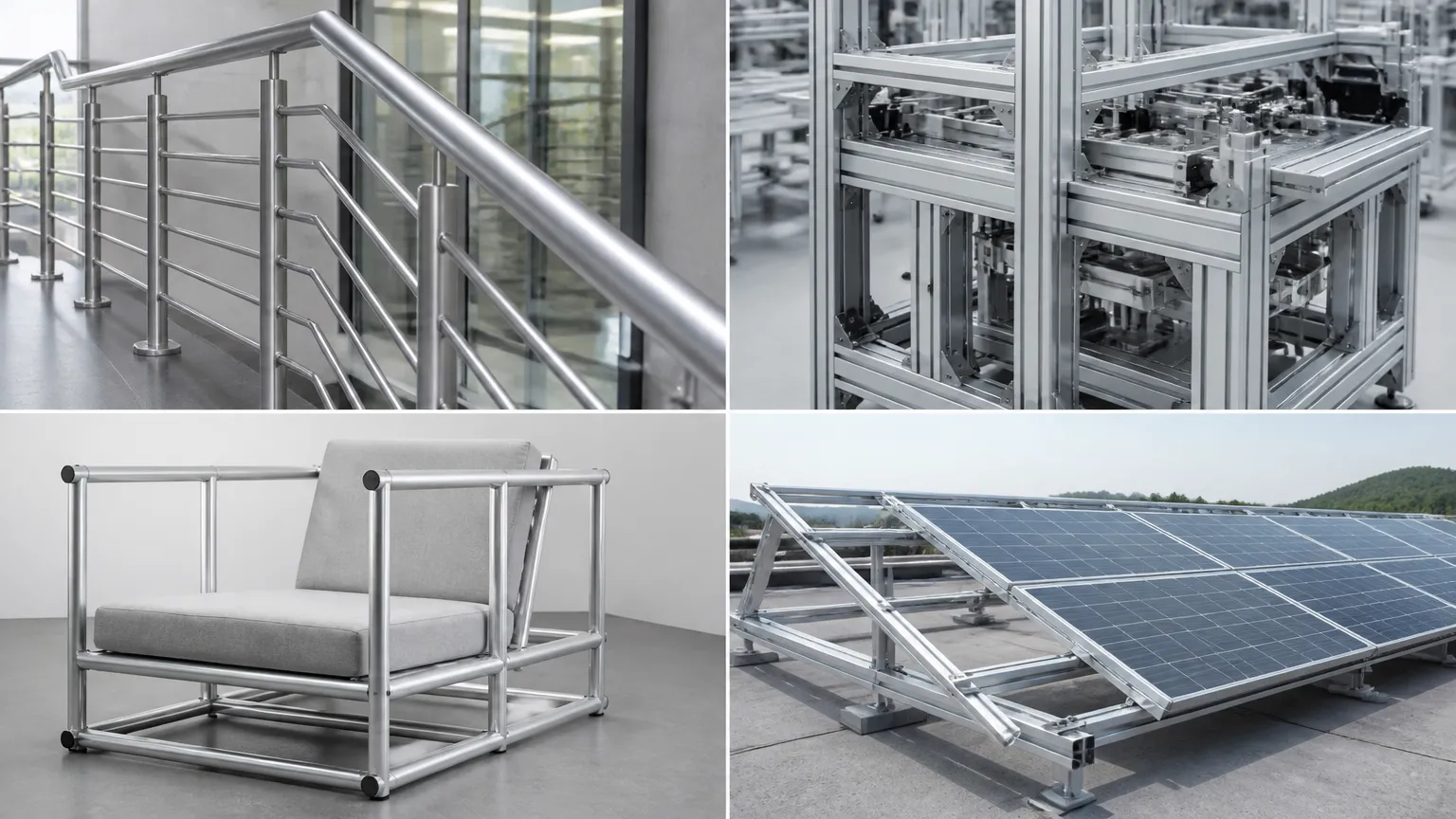
Aluminum tubing is used across many industries because it combines low weight, corrosion resistance, formability and good finishing options.
| Application | Typical sections | Common alloy notes | Selection focus |
|---|---|---|---|
| Handrails and railings | Round or rectangular tube | 6063-T5/T6 for appearance and corrosion resistance | Surface finish, straightness, joint design |
| Machine frames and guards | Square or rectangular tube | 6061 or 6063 depending on load | Stiffness, wall thickness, joining method |
| Architectural framing | Rectangular or custom hollow profiles | 6063 for visible surfaces | Tolerance, finish, color consistency |
| Transportation equipment | Round, square or rectangular tube | 6061-T6 where higher strength is needed | Weight, vibration, welding, fatigue |
| Furniture and display systems | Square or custom tube | 6063 or 6061 depending on load | Appearance, scratch resistance, assembly |
| Solar and energy structures | Rectangular or custom profiles | Alloy selected by load and environment | Corrosion, mounting, wind and snow load |
| Enclosures and equipment housings | Custom hollow profiles | 6061 or 6063 with machining | EMC, sealing, mounting and tolerance |
The best choice depends on the complete assembly, not the alloy name alone.
Ordering and Tolerance Notes
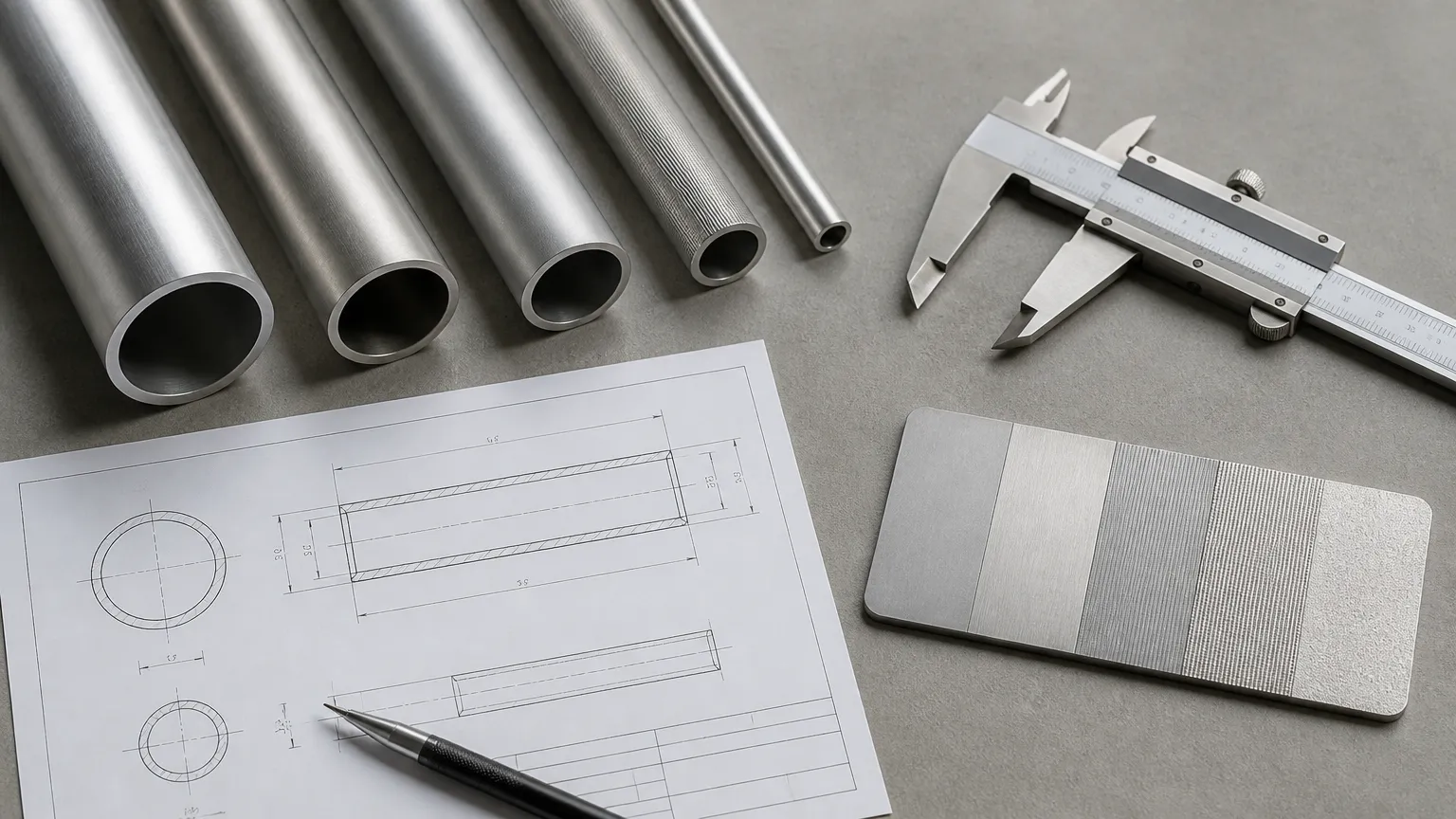
A clear RFQ reduces the risk of receiving a tube that is technically aluminum but unsuitable for the application. Include the following:
- Section shape: round, square, rectangular, oval or custom hollow profile.
- Critical dimensions: OD or width and height, wall thickness, corner radius and length.
- Alloy and temper: for example, 6061-T6 or 6063-T5.
- Governing standard: ASTM B221, ASTM B241, EN, ISO or the customer standard, including the edition.
- Tolerances: cross-section, wall variation, straightness, twist, cut length and machining allowance.
- Mechanical requirements: tensile, yield, elongation and test method where required.
- Surface treatment: mill finish, anodizing, powder coating, PVDF, polishing or other finish.
- Secondary operations: cutting, drilling, punching, CNC machining, bending or welding.
- Inspection and documentation: material certificate, dimensional report, first-article inspection or other records.
- Quantity and delivery requirements: expected order quantity, packaging and destination.
Yoverd’s round and rectangular tube pages list surface options such as mill finish, anodizing, powder coating, PVDF and polishing, and processing services including cutting, drilling, CNC machining, punching and bending. The company also lists ISO 9001:2015, ISO 14001:2015, ISO 45001:2018, CE (EN 1090-1) and IATF 16949:2016 certifications on its quality control page. Certification scope and product applicability should still be confirmed for each order.
FAQ
Round vs square vs rectangular tube — how do I choose?
Choose round tube when you need uniform geometry, clean appearance, bending or a passage for another component. Choose square tube when you need flat faces for joining, clamping or mounting. Choose rectangular tube when stiffness in one direction is more important than in the other.
Which alloy should I use for structural tube?
Start with 6061-T6 when strength is the main requirement. Consider 6063-T5 or T6 for architectural, decorative or complex profiles where finish and extrudability matter. The final choice should be confirmed against the load calculation, joining method and governing standard.
What wall thicknesses are available?
Wall thickness is normally customized to the application. The required wall depends on load, span, support condition, machining, welding and tolerance. Yoverd’s product pages list customized wall thickness for round, rectangular and custom hollow profiles.
What is the difference between extruded and seamless tube?
Extruded tube is formed by pushing heated aluminum through a die and is common for structural, architectural and mechanical applications. Seamless pipe or tube is produced from a hollow or pierced ingot using a die and mandrel method and is used when pressure integrity or a seamless form is required.
Can aluminum tubing be anodized or powder coated?
Yes. Common finishes include mill finish, anodizing, powder coating, PVDF and polishing. The alloy, temper, surface condition and color requirement should be specified before production because they affect final appearance and performance.
Do I need to specify a standard?
Yes, if the application has structural, pressure, regulatory or customer-specific requirements. ASTM B221 is commonly referenced for general extruded tubes, while ASTM B241 is used for seamless pipe and seamless extruded tube in pressure applications. Other regional or customer standards may also apply.
Get the Specification Right Before You Order
The most efficient way to order aluminum tubing is to define the section, alloy, temper, wall thickness, standard, finish and inspection requirements together. A complete drawing package helps the extruder confirm die feasibility, tolerance, machining and delivery before production starts.
Send your section drawing, required alloy and temper, dimensions, tolerances, finish and expected quantity to contact Yoverd Aluminium for a technical review and quotation.