
Choosing the right aluminum profile is about much more than selecting a shape or wall thickness. The aluminum alloy, temper, profile geometry, extrusion process, surface treatment, and intended application all influence the final performance of an aluminum extrusion.
For architects, engineers, manufacturers, contractors, and aluminum profile buyers, terms such as 6063-T5, 6063-T6, 6061-T6, 6005A-T6, and 6082-T6 can sometimes be confusing.
What do these numbers mean? Which aluminum profile grade is suitable for structural applications? Is 6063 better than 6061? When should you choose 6005A or 6082?
In this complete guide, Yoverd Aluminium explains the most common aluminum profile grades, alloy series, temper designations, performance characteristics, and applications to help you select the right aluminum extrusion for your project.
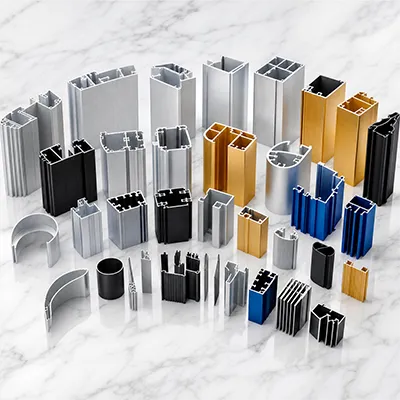
Table of Contents
- What Is an Aluminum Profile Grade?
- Understanding Aluminum Alloy Designations
- Aluminum Alloy vs. Temper: What’s the Difference?
- Major Aluminum Alloy Series
- 6063 Aluminum
- 6063-T5 vs. 6063-T6
- 6060 Aluminum
- 6061 Aluminum
- 6005A Aluminum
- 6082 Aluminum
- 6063 vs. 6061 vs. 6005A vs. 6082
- Aluminum Profile Grades by Application
- Industrial Aluminum Profile Grades
- What Factors Affect Aluminum Profile Performance?
- Aluminum Profile Surface Treatments
- Standard vs. Custom Aluminum Extrusion Profiles
- Aluminum Profile Standards
- How to Choose the Right Aluminum Profile Grade
- Aluminum Profile Grades: Quick Selection Guide
- Frequently Asked Questions About Aluminum Profile Grades
- Why Choose Yoverd Aluminium for Aluminum Extrusion Profiles?
- Get the Right Aluminum Profile for Your Project
1. What Is an Aluminum Profile Grade?
The term aluminum profile grade is commonly used to describe the aluminum alloy used to manufacture an extrusion profile.
Aluminum alloys are produced by adding controlled amounts of elements such as:
- Silicon (Si)
- Magnesium (Mg)
- Manganese (Mn)
- Copper (Cu)
- Zinc (Zn)
These alloying elements change the mechanical, physical, corrosion, and processing characteristics of aluminum.
The Aluminum Association designation system divides wrought aluminum alloys into several major series according to their principal alloying elements.
| Alloy Series | Main Alloying Element | General Characteristics |
|---|---|---|
| 1xxx | Aluminum | High purity, excellent conductivity and corrosion resistance |
| 2xxx | Copper | High strength, heat treatable |
| 3xxx | Manganese | Good formability and corrosion resistance |
| 4xxx | Silicon | Lower melting point, commonly used in welding-related applications |
| 5xxx | Magnesium | Excellent corrosion resistance and weldability |
| 6xxx | Magnesium + Silicon | Good strength, extrudability and corrosion resistance |
| 7xxx | Zinc | Very high strength |
| 8xxx | Other elements | Specialized applications |
For aluminum extrusion profiles, the 6xxx series is particularly important because it offers a practical combination of strength, extrudability, corrosion resistance, weldability, machinability, and surface quality.
2. Understanding Aluminum Alloy Designations
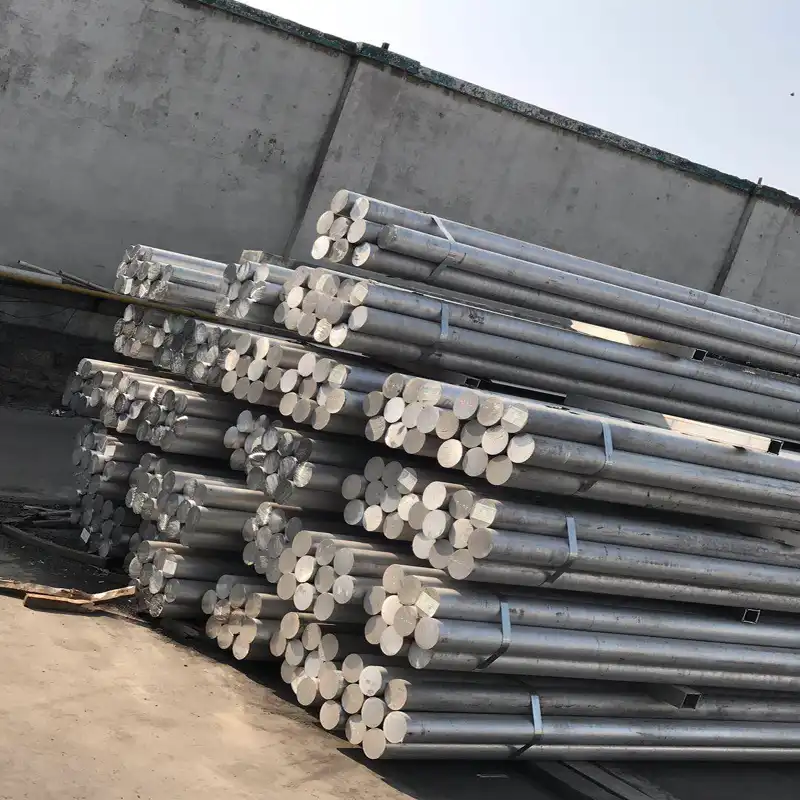
A four-digit number such as 6063, 6061, 6005A, or 6082 identifies an aluminum alloy.
However, the alloy number does not tell you everything about the final mechanical properties.
For example:
- 6063 = aluminum alloy
- 6063-T5 = aluminum alloy + temper
- 6063-T6 = aluminum alloy + different temper
Therefore, 6063-T5 and 6063-T6 have the same basic alloy family but different material conditions and mechanical properties.
When purchasing aluminum extrusion profiles, it is important to specify the complete material designation rather than simply asking for “6063 aluminum.”
A typical technical specification may include:
Alloy + Temper + Standard + Dimensions + Tolerances + Surface Treatment
This approach helps reduce misunderstandings between aluminum extrusion manufacturers and buyers.
3. Aluminum Alloy vs. Temper: What’s the Difference?
One of the most important concepts in aluminum profile selection is the difference between alloy and temper.
The alloy describes the chemical composition of the aluminum.
The temper describes the material condition after processing, including heat treatment, cooling, aging, or other treatments.
For example:
6061-T6
- 6061 = aluminum alloy
- T6 = temper condition
6063-T5
- 6063 = aluminum alloy
- T5 = temper condition
The same alloy can therefore be supplied in different tempers, resulting in different mechanical properties.
For aluminum extrusion buyers, this distinction is critical when comparing strength, hardness, machinability, and structural performance.
What Does T5 Mean in Aluminum?
T5 is a temper designation commonly encountered in extruded aluminum profiles.
It generally indicates that the product has been cooled from an elevated-temperature shaping process and artificially aged.
T5 is widely used for architectural and general-purpose extrusion applications.
What Does T6 Mean in Aluminum?
T6 is generally associated with solution heat treatment followed by artificial aging.
For many heat-treatable aluminum alloys, T6 can provide higher mechanical properties than T5.
However, the exact properties depend on the specific alloy, product dimensions, and applicable material standard.
T6 should not automatically be considered “better” than T5.
The correct temper depends on the actual application and engineering requirements.
4. Major Aluminum Alloy Series
Before comparing specific aluminum extrusion grades, it is useful to understand the major alloy families.
1xxx Series
The 1xxx series contains very high-purity aluminum.
Typical characteristics include:
- Excellent electrical conductivity
- Excellent thermal conductivity
- Excellent corrosion resistance
- High ductility
- Relatively low strength
These alloys are more commonly associated with electrical, thermal, and chemical applications than structural extrusion profiles.
3xxx Series
Manganese is the primary alloying element.
3xxx alloys generally provide:
- Good formability
- Good corrosion resistance
- Moderate strength
They are commonly used where forming and corrosion resistance are important.
5xxx Series
Magnesium is the principal alloying element.
5xxx alloys are known for:
- Good corrosion resistance
- Good weldability
- Good strength
- Good performance in demanding environments
Specific 5xxx alloys can be used in marine and transportation applications.
6xxx Series
The 6xxx series contains magnesium and silicon as major alloying elements.
This series is particularly important for aluminum extrusion because it offers a useful balance between:
- Strength
- Extrudability
- Corrosion resistance
- Weldability
- Machinability
- Surface quality
Common extrusion alloys include:
6060, 6063, 6061, 6005A, and 6082.
These are among the most relevant aluminum profile grades for architectural, industrial, structural, and custom extrusion applications.
7xxx Series
Zinc is the primary alloying element.
7xxx alloys can achieve very high strength and are associated with demanding applications.
However, the highest-strength alloy is not automatically the best choice for an aluminum extrusion.
Extrudability, corrosion resistance, weldability, surface finish, cost, and application requirements must also be considered.
5. 6063 Aluminum
6063 is one of the most widely used aluminum alloys for architectural aluminum extrusion profiles.
It belongs to the 6xxx series and is based primarily on magnesium and silicon.
One of its major advantages is its combination of excellent extrudability and surface quality.
Key characteristics of 6063 aluminum
- Excellent extrudability
- Good corrosion resistance
- Good surface finish
- Excellent suitability for anodizing
- Good weldability
- Good formability
- Moderate strength
6063 is particularly suitable when appearance is important.
Typical applications include:
- Windows
- Doors
- Curtain walls
- Architectural profiles
- Decorative profiles
- Furniture
- Interior systems
- Lighting profiles
- General industrial profiles
For construction projects, Yoverd Aluminium supplies architectural aluminum extrusion profiles for residential, commercial, and other building applications.
Yoverd’s architectural profile range includes window and door profiles, curtain wall profiles, structural architectural profiles, and thermal break profiles.
6. 6063-T5 vs. 6063-T6
One of the most common questions from aluminum extrusion buyers is:
What is the difference between 6063-T5 and 6063-T6?
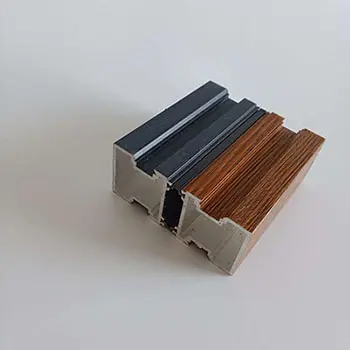
Both use the 6063 alloy, but they have different temper conditions.
6063-T5
6063-T5 is commonly used for:
- Architectural profiles
- Window and door systems
- Decorative extrusions
- General-purpose aluminum profiles
It provides a practical balance of mechanical performance, extrusion capability, and surface quality.
6063-T6
6063-T6 may be selected where higher mechanical performance is required.
However, the appropriate temper should be selected according to:
- Required strength
- Profile dimensions
- Profile geometry
- Applicable standard
- Application
- Manufacturing process
Therefore, 6063-T6 is not automatically the correct choice simply because it can provide higher strength.
For a custom extrusion project, the material specification should be evaluated together with the profile design.
7. 6060 Aluminum
6060 is another popular 6xxx series alloy for aluminum extrusion.
It is especially suitable for complex extrusion geometries and applications where surface appearance is important.
Typical characteristics
- Excellent extrudability
- Good surface finish
- Good anodizing response
- Good corrosion resistance
- Good weldability
- Good formability
- Moderate strength
Typical applications include:
- Architectural profiles
- Window and door systems
- Decorative profiles
- Furniture
- Electronic housings
- Heat dissipation components
- Industrial profiles
6060 can be considered when extrusion complexity and appearance are important, while higher-strength alloys may be more suitable for demanding structural applications.
8. 6061 Aluminum
6061 is one of the best-known general-purpose structural aluminum alloys.
Compared with 6063, 6061 is commonly considered when greater mechanical performance, machining, or fabrication capability is required.
Key characteristics of 6061 aluminum
- Good strength
- Good corrosion resistance
- Good machinability
- Good weldability
- Good toughness
- Suitable for structural applications
- Suitable for secondary machining
Typical applications include:
- Machine structures
- Automotive components
- Industrial equipment
- Transportation components
- Structural frames
- Marine components
- Precision-machined aluminum parts
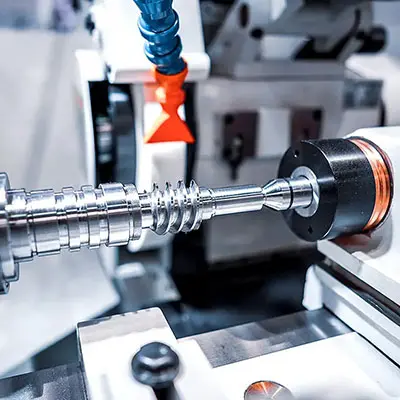
For industrial customers requiring extrusion plus secondary processing, Yoverd Aluminium also provides CNC machined aluminum parts, including milling, drilling, turning, tapping, and other machining processes.
9. 6005A Aluminum
6005A is a 6xxx series aluminum alloy that can provide a useful balance between structural performance, extrusion capability, and surface quality.
It may be considered for applications requiring more mechanical performance than typical architectural extrusion alloys while maintaining good extrusion characteristics.
Typical applications include:
- Railway components
- Transportation structures
- Industrial frames
- Structural profiles
- Machinery
- Architectural structures
- Vehicle components
6005A can be a useful option where both strength and appearance are important.
For architectural projects that require stronger supporting sections, Yoverd Aluminium supplies structural architectural aluminum profiles for supporting frames, substructures, and architectural systems.
10. 6082 Aluminum
6082 is a higher-strength 6xxx series aluminum alloy commonly considered for structural extrusion applications.
It is particularly useful when mechanical strength is an important part of the design requirements.
Typical characteristics
- High strength within the 6xxx extrusion family
- Good corrosion resistance
- Good machinability
- Good weldability
- Suitable for structural applications
- Good durability
Typical applications include:
- Heavy-duty structures
- Machine frames
- Industrial equipment
- Transportation structures
- Structural beams
- Infrastructure components
- Load-bearing components
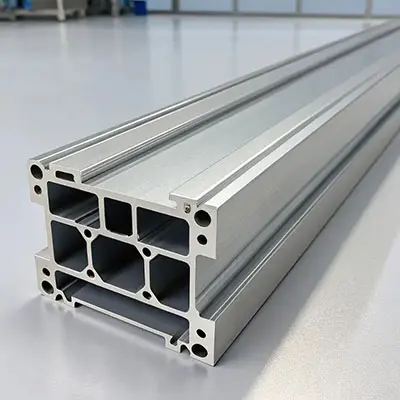
For industrial applications, Yoverd Aluminium offers industrial aluminum extrusion profiles for machinery, automation equipment, production lines, and industrial structural systems. The company’s industrial range includes 6063, 6061, and 6082 extrusion options.
11. 6063 vs. 6061 vs. 6005A vs. 6082
There is no universal “best” aluminum profile grade.
Each alloy provides a different balance of properties.
| Alloy | Relative Strength | Extrudability | Surface Quality | Typical Applications |
|---|---|---|---|---|
| 6060 | Moderate | Excellent | Excellent | Architectural, decorative |
| 6063 | Moderate | Excellent | Excellent | Windows, doors, architectural |
| 6061 | High | Good | Good | Structural, machining, industrial |
| 6005A | Medium-High | Very Good | Very Good | Structural, transportation |
| 6082 | High | Good | Good | Heavy-duty structural |
These are general engineering comparisons rather than universal material specifications.
Actual mechanical properties depend on:
- Alloy
- Temper
- Profile dimensions
- Wall thickness
- Profile geometry
- Manufacturing process
- Applicable standard
For this reason, an experienced aluminum extrusion manufacturer should evaluate the material together with the actual profile design.
12. Aluminum Profile Grades by Application
Instead of asking:
“Which aluminum grade is the best?”
a more useful question is:
“Which aluminum alloy is appropriate for my application?”
Architectural Aluminum Profiles
For architectural applications, 6060 and 6063 are commonly considered because of their excellent extrusion performance and surface quality.
They can be used for:
- Windows
- Doors
- Curtain walls
- Facades
- Railings
- Decorative profiles
- Interior systems
Yoverd Aluminium provides architectural aluminum extrusion profiles for building and construction projects.

Aluminum Window and Door Profiles
Window and door systems require more than basic strength.
Important considerations include:
- Dimensional accuracy
- Surface quality
- Corrosion resistance
- Thermal performance
- Weather resistance
- Profile design
- Glass compatibility
Yoverd Aluminium manufactures aluminum window and door extrusion profiles with options including anodized, powder-coated, PVDF, and wood-grain finishes. The company also provides thermal-break options using PA66 GF25 or customized system requirements.
Thermal Break Aluminum Profiles
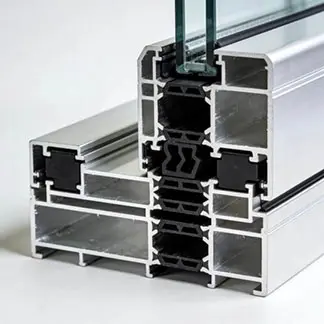
For energy-efficient building systems, thermal break profiles use an insulating polyamide strip to reduce heat transfer through the aluminum frame.
Yoverd Aluminium provides thermal break aluminum profiles for energy-efficient windows, doors, and curtain wall applications.
Curtain Wall Aluminum Profiles
Curtain wall systems require carefully engineered aluminum profiles to support glazing, panels, connections, and architectural loads.
Important considerations include:
- Structural strength
- Profile geometry
- Dimensional tolerances
- Surface finish
- Weather exposure
- System compatibility
Yoverd Aluminium provides curtain wall aluminum extrusion profiles for modern building envelope systems.
Facade and Decorative Aluminum Profiles
Facade systems often combine structural performance with architectural appearance.
Important factors include:
- Surface quality
- Color consistency
- Weather resistance
- Profile geometry
- Corrosion resistance
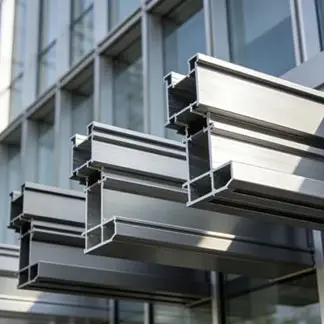
For these applications, Yoverd Aluminium offers facade and decorative aluminum profiles with surface treatments including anodizing, powder coating, PVDF, and wood-grain finishes.
13. Industrial Aluminum Profile Grades
Industrial applications often prioritize:
- Mechanical strength
- Dimensional consistency
- Structural stiffness
- Machinability
- Assembly compatibility
- Custom profile geometry
Typical applications include:
- Machine frames
- Automation equipment
- Production lines
- Conveyor systems
- Equipment enclosures
- Industrial structures
Yoverd Aluminium’s industrial aluminum extrusion profiles are designed for machinery, automation, production lines, and structural industrial applications.
Machine Frame Aluminum Profiles
Machine frame profiles require a combination of:
- Structural stiffness
- Dimensional accuracy
- Easy assembly
- Machinability
- Reliable surface finish
Yoverd Aluminium supplies machine frame aluminum profiles for industrial equipment and machinery structures.
Automation and Assembly Line Profiles
Aluminum extrusion profiles are widely used in automation equipment because they can provide modular structural systems while allowing different components to be assembled and modified.
Applications include:
- Automation equipment
- Production lines
- Workstations
- Equipment guards
- Machine structures
Yoverd Aluminium’s automation and assembly line profiles are part of its industrial aluminum extrusion product range.
Conveyor System Aluminum Profiles
Conveyor systems require profiles with appropriate stiffness, dimensional consistency, and compatibility with accessories and mechanical components.
Yoverd Aluminium provides conveyor system aluminum profiles and customized conveyor extrusion solutions.
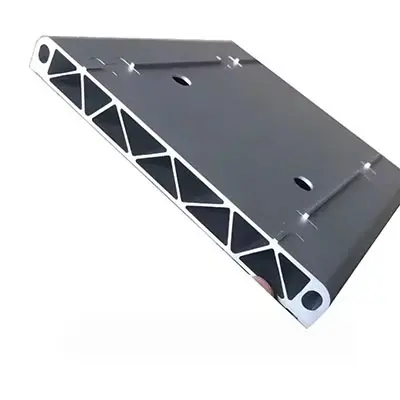
For example, Yoverd’s high-strength roller conveyor profiles can be customized in alloys including 6063-T5, 6063-T6, 6061-T6, and 6082-T6, with options for profile dimensions, wall thickness, T-slot designs, machining, and surface treatment.
14. What Factors Affect Aluminum Profile Performance?
Aluminum alloy is only one part of the equation.
The final performance of an aluminum extrusion depends on several factors.
14.1 Alloy
The alloy determines the basic chemical and mechanical characteristics of the material.
Different alloys offer different balances of:
- Strength
- Corrosion resistance
- Extrudability
- Weldability
- Machinability
- Surface quality
14.2 Temper
The temper affects the material’s mechanical properties.
For example, T5 and T6 conditions can provide different performance levels for the same basic alloy.
Therefore, specifications such as 6063-T5 and 6063-T6 should be treated as different material conditions.
14.3 Profile Geometry
Cross-sectional geometry can have a major effect on stiffness and load capacity.
Important design factors include:
- Wall thickness
- Cross-sectional area
- Hollow sections
- Ribs
- Corners
- Moment of inertia
- Connection points
A well-designed extrusion can achieve high structural efficiency without simply increasing material thickness.
14.4 Manufacturing Quality
Extrusion temperature, die design, extrusion speed, cooling, aging, straightening, cutting, and dimensional control can all influence the final product.
This is why the extrusion supplier’s manufacturing capability is an important consideration alongside alloy selection.
14.5 Surface Treatment
Anodizing, powder coating, PVDF, electrophoresis, wood-grain finishing, and other treatments affect:
- Appearance
- Corrosion resistance
- Weather resistance
- Wear resistance
- Long-term durability
15. Aluminum Profile Surface Treatments
Selecting the right alloy is only the first step.
The surface treatment should also match the final application.
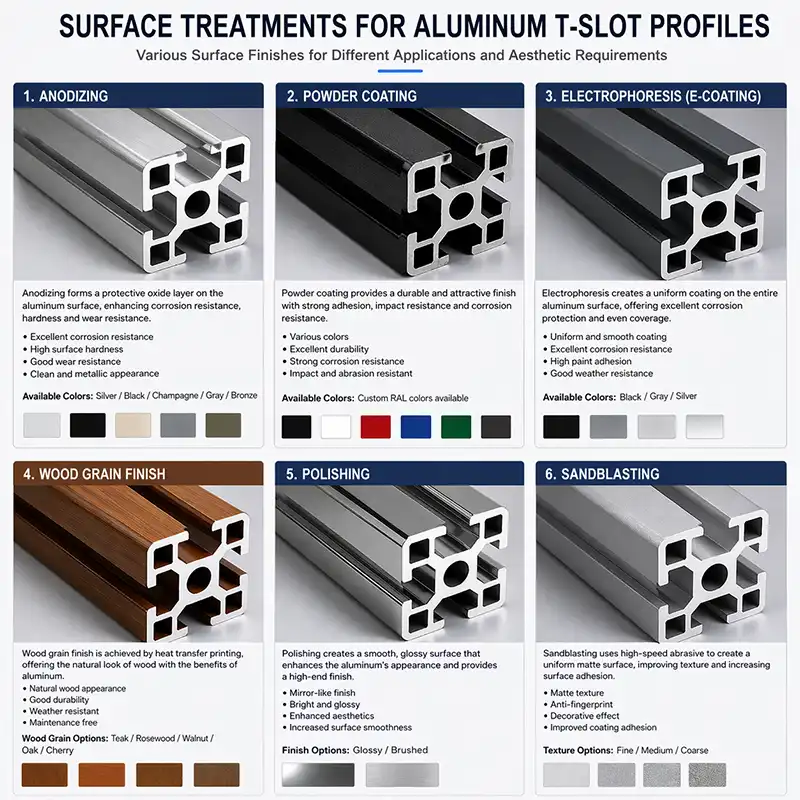
Anodized Aluminum Profiles
Anodizing creates a controlled oxide layer on the aluminum surface.
It can provide:
- Improved corrosion resistance
- Improved wear resistance
- Durable surface appearance
- Metallic decorative finishes
Anodizing is widely used for architectural and decorative aluminum profiles.
Yoverd Aluminium provides anodized aluminum extrusion profiles for architectural and industrial applications.
Powder Coated Aluminum Profiles
Powder coating provides a broad range of colors and finishes.
It is commonly used for:
- Windows
- Doors
- Curtain walls
- Facades
- Railings
- Furniture
- Industrial profiles
Yoverd Aluminium provides powder coated aluminum profiles with customized colors and finishes for different applications.
PVDF Coated Aluminum Profiles
PVDF coatings are commonly considered for architectural applications where long-term weather resistance and color durability are important.
Typical applications include:
- Building facades
- Curtain walls
- Exterior architectural systems
Yoverd’s architectural extrusion range includes PVDF surface treatment options.
Wood Grain Aluminum Profiles
Wood-grain finishes can provide the appearance of natural wood while maintaining the properties of aluminum.
They are commonly used for:
- Doors
- Windows
- Facades
- Interior decoration
- Architectural systems
16. Standard vs. Custom Aluminum Extrusion Profiles
There are two main approaches when purchasing aluminum profiles.
Standard Aluminum Profiles
Standard profiles are suitable when an existing cross-section meets the project’s requirements.
Typical examples include:
- Square aluminum profiles
- Rectangular aluminum profiles
- Round aluminum profiles
- U-shaped profiles
- L-shaped profiles
- T-slot profiles
They can reduce tooling requirements and simplify procurement.
Yoverd Aluminium supplies standard and customized aluminum extrusion profiles in a range of shapes and applications.
Custom Aluminum Extrusion Profiles
Custom extrusion is more suitable when the required profile has:
- A unique cross-section
- Special dimensions
- Tight tolerances
- Integrated connection features
- Special wall thickness
- Specific mechanical requirements
With custom extrusion, the profile can be designed around the final product rather than forcing the product to fit an existing section.
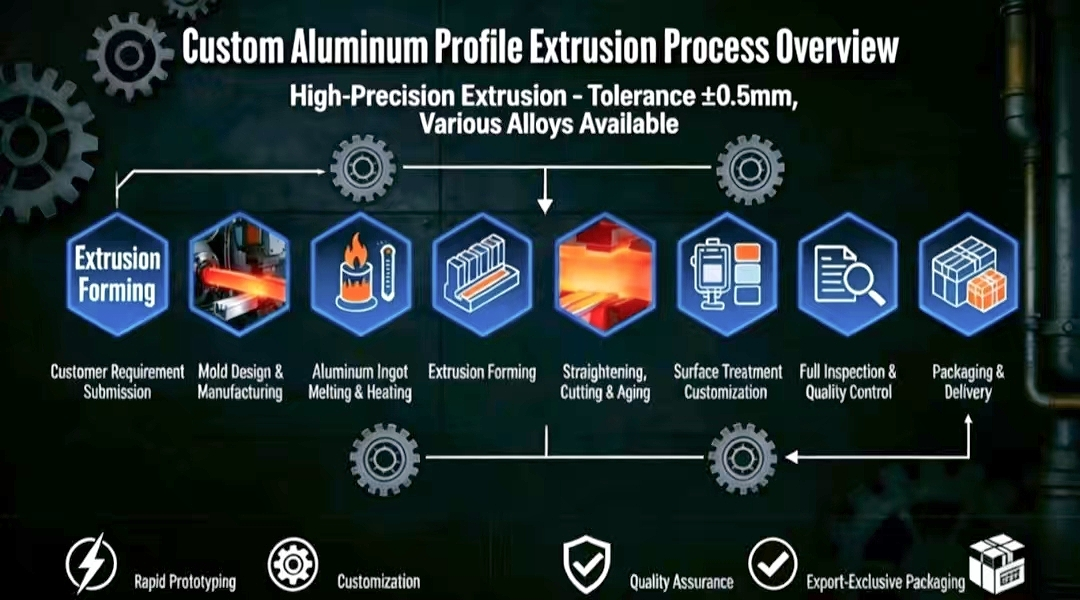
Yoverd Aluminium provides custom aluminum extrusion profiles based on customer drawings or samples, with services covering design review, mold development, extrusion, machining, surface treatment, inspection, and delivery.
17. Aluminum Profile Standards
When purchasing aluminum extrusion profiles internationally, it is important to specify the applicable material standard.
A typical technical specification may include:
Alloy + Temper + Standard + Dimensions + Tolerances + Surface Finish + Inspection Requirements
For example:
EN AW-6063 T5 aluminum extrusion profile
or:
EN AW-6082 T6 structural aluminum extrusion
However, the complete specification should also define dimensional tolerances, surface requirements, and other project-specific requirements.
EN 755-2 specifies mechanical property requirements for extruded aluminum rod, bar, tube, and profiles according to factors such as alloy, temper, and dimensions.
The Aluminum Association also maintains alloy and temper designation systems for aluminum products.
For international projects, buyers should confirm the exact standard required by the end application and destination market.
18. How to Choose the Right Aluminum Profile Grade
A practical material selection process can follow these steps.
Step 1: Define the Application
Determine whether the profile will be used for:
- Architecture
- Windows and doors
- Curtain walls
- Railings
- Industrial machinery
- Automation
- Transportation
- Structural systems
- Heat dissipation
- Electronics
Step 2: Define the Mechanical Requirements
Consider:
- Tensile strength
- Yield strength
- Stiffness
- Deflection
- Load capacity
- Fatigue requirements
Step 3: Evaluate Profile Geometry
Consider:
- Cross-sectional dimensions
- Wall thickness
- Hollow sections
- Profile complexity
- Dimensional tolerances
Step 4: Select the Alloy
As a starting point:
| Requirement | Possible Starting Alloys |
|---|---|
| Architectural appearance | 6060 / 6063 |
| Window and door profiles | 6060 / 6063 |
| Decorative extrusion | 6060 / 6063 |
| General industrial profiles | 6061 / 6063 |
| Structural applications | 6005A / 6061 / 6082 |
| Heavy-duty structures | 6082 |
| Machined components | 6061 / 6082 |
| Structural + appearance | 6005A |
| Complex extrusion geometry | 6060 / 6063 |
These are starting points rather than universal material specifications.
Step 5: Select the Temper
Choose the appropriate temper according to:
- Required mechanical properties
- Alloy
- Profile dimensions
- Manufacturing process
- Applicable standard
Step 6: Select the Surface Treatment
Depending on the application, consider:
- Anodizing
- Powder coating
- PVDF
- Electrophoresis
- Wood grain
- Mill finish
- Brushed finish
- Polished finish
Step 7: Confirm the Complete Specification
Before production, confirm:
Alloy + Temper + Standard + Dimensions + Tolerances + Surface Treatment + Packaging + Inspection Requirements
This helps prevent material and production misunderstandings before mass production begins.
19. Aluminum Profile Grades: Quick Selection Guide
| Project Requirement | Common Alloy Options |
|---|---|
| Architectural appearance | 6060 / 6063 |
| Window and door profiles | 6063 / 6060 |
| Decorative anodized profiles | 6063 |
| General industrial profiles | 6063 / 6061 |
| Structural profiles | 6005A / 6061 / 6082 |
| Heavy-duty structural profiles | 6082 |
| Machined aluminum components | 6061 / 6082 |
| Structural profiles with good appearance | 6005A |
| Complex extrusion geometry | 6060 / 6063 |
| Custom industrial extrusion | 6061 / 6005A / 6082, depending on requirements |
The final alloy and temper should always be confirmed against the project’s engineering requirements and applicable standards.
20. Frequently Asked Questions About Aluminum Profile Grades
What is the most common aluminum profile grade?
For many architectural aluminum extrusion applications, 6063 is one of the most widely used alloys because of its excellent extrudability, surface quality, and corrosion resistance.
Industrial and structural applications may use 6061, 6005A, or 6082 depending on the required mechanical performance.
Is 6063 stronger than 6061?
Generally, 6061 provides higher structural strength than 6063 in commonly specified tempers.
However, 6063 typically provides better extrusion characteristics and surface quality.
The correct choice therefore depends on the application rather than strength alone.
What is the difference between 6063-T5 and 6063-T6?
Both are based on the 6063 alloy but have different temper conditions.
The temper affects mechanical properties, so 6063-T5 and 6063-T6 should not automatically be treated as interchangeable.
Is 6082 stronger than 6061?
6082 is generally considered a higher-strength 6xxx series alloy than 6061 in many product conditions.
However, the correct choice depends on the complete application, including welding, machining, extrusion geometry, corrosion environment, and applicable standards.
Which aluminum alloy is best for architectural profiles?
6060 and 6063 are commonly considered for architectural profiles because they provide excellent extrusion characteristics and surface quality.
For structural architectural components, 6005A, 6061, or 6082 may be considered depending on the required mechanical performance.
Which aluminum alloy is best for structural profiles?
There is no universal answer.
6061, 6005A, and 6082 are commonly considered for structural extrusion applications, but the correct selection depends on:
- Load requirements
- Profile geometry
- Connection design
- Operating environment
- Welding requirements
- Machining requirements
- Applicable standards
What does T6 mean in aluminum?
T6 is a temper designation generally associated with solution heat treatment followed by artificial aging.
The exact requirements and resulting properties depend on the alloy and product form.
What does T5 mean in aluminum?
T5 generally indicates that an aluminum product has been cooled from an elevated-temperature shaping process and artificially aged.
It is commonly encountered in extruded aluminum profiles.
Can aluminum profiles be customized?
Yes.
Custom aluminum extrusion allows the profile cross-section, dimensions, alloy, temper, tolerances, and surface treatment to be specified according to the project.
Yoverd Aluminium provides custom aluminum extrusion solutions based on drawings, samples, dimensions, and application requirements.
21. Why Choose Yoverd Aluminium for Aluminum Extrusion Profiles?
Choosing the right aluminum alloy is only one part of a successful extrusion project.
The supplier’s ability to control the complete manufacturing process is equally important.
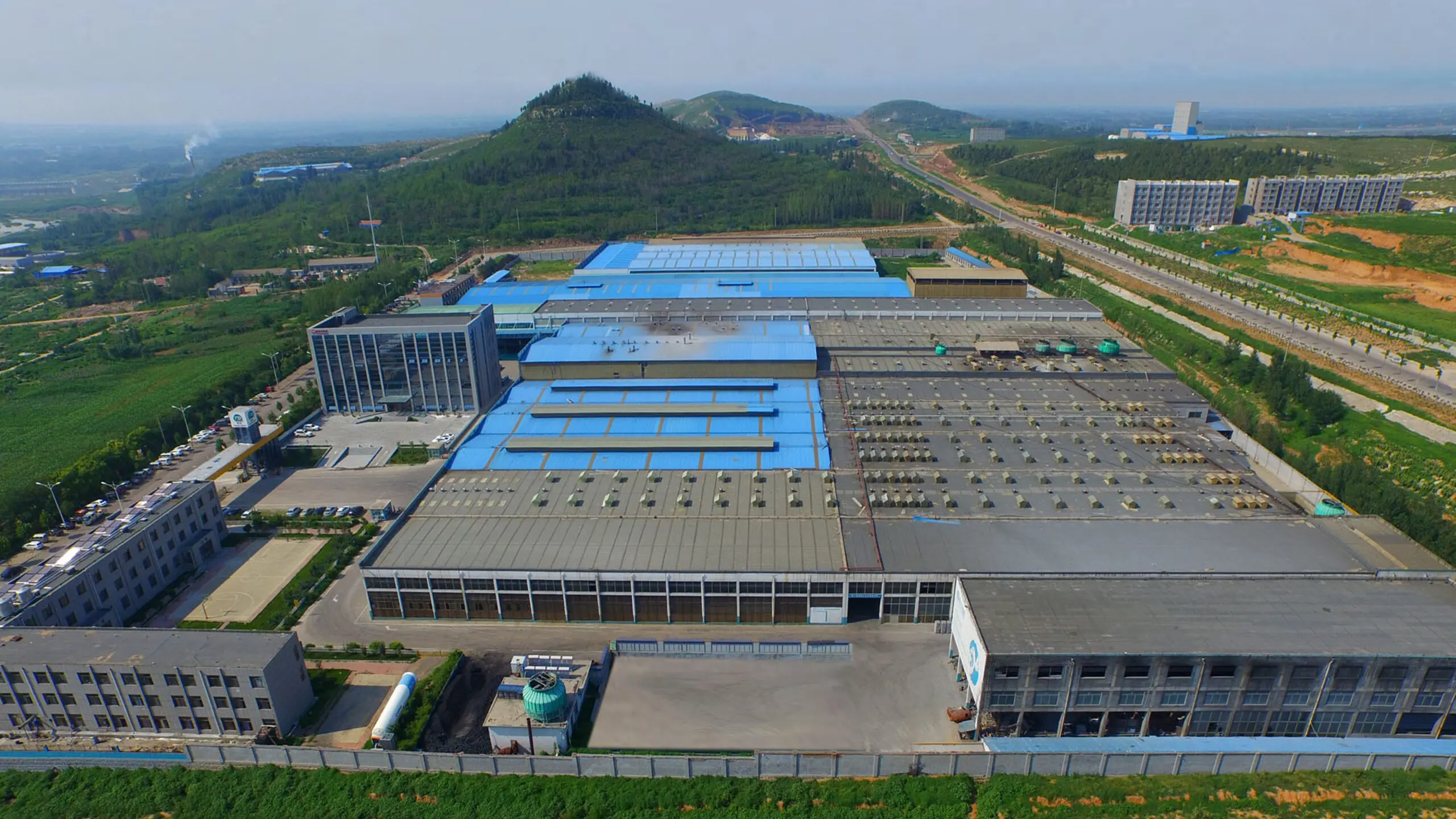
Yoverd Aluminium is a China-based aluminum extrusion manufacturer offering integrated services from mold design and extrusion to CNC machining and surface finishing. Its website states that the company has more than 20 years of aluminum extrusion experience, 25 extrusion lines, annual extrusion capacity of 45,000 tons, and exports to more than 30 countries.
Yoverd Aluminium provides:
- Aluminum alloy selection
- Profile design support
- Mold and die development
- Aluminum extrusion
- Custom aluminum profiles
- CNC machining
- Cutting and fabrication
- Anodizing
- Powder coating
- PVDF coating
- Wood-grain finishing
- Quality inspection
- Packaging and shipping
For customers who need multiple processes from one supplier, this integrated model can simplify project coordination.
Yoverd’s custom extrusion service covers the process from drawing/sample submission and design review through mold development, sample approval, mass production, surface treatment, inspection, packaging, and delivery.
22. Get the Right Aluminum Profile for Your Project
The right aluminum profile grade depends on much more than the alloy number.
A successful specification considers:
Alloy + Temper + Profile Geometry + Mechanical Requirements + Surface Treatment + Manufacturing Process + Applicable Standard
For architectural applications, 6060 and 6063 may be suitable starting points.
For structural and industrial applications, 6005A, 6061, or 6082 may be considered depending on the engineering requirements.
For custom projects, the profile geometry and material selection should be developed together.
If you have an aluminum profile drawing, sample, specification, or project requirement, Yoverd Aluminium can help evaluate the appropriate alloy, temper, extrusion design, machining requirements, and surface treatment.
Request a Custom Aluminum Extrusion Quote
Send Yoverd Aluminium your drawing, sample, dimensions, alloy requirements, application, quantity, and surface finish requirements.
Our team can review your requirements and provide a customized aluminum extrusion solution.
What to Send Us
- 2D or 3D drawing
- Existing sample, if available
- Required alloy and temper
- Profile dimensions
- Surface treatment
- Annual or project quantity
- Application
- Machining requirements
- Packaging requirements
From Drawing to Finished Aluminum Profile
Drawing Review → Die Design → Sample → Extrusion → CNC Machining → Surface Treatment → Inspection → Packaging → Delivery
Get a Free Aluminum Extrusion Quote
Yoverd Aluminium — Your Partner for Custom Aluminum Extrusion Profiles.