

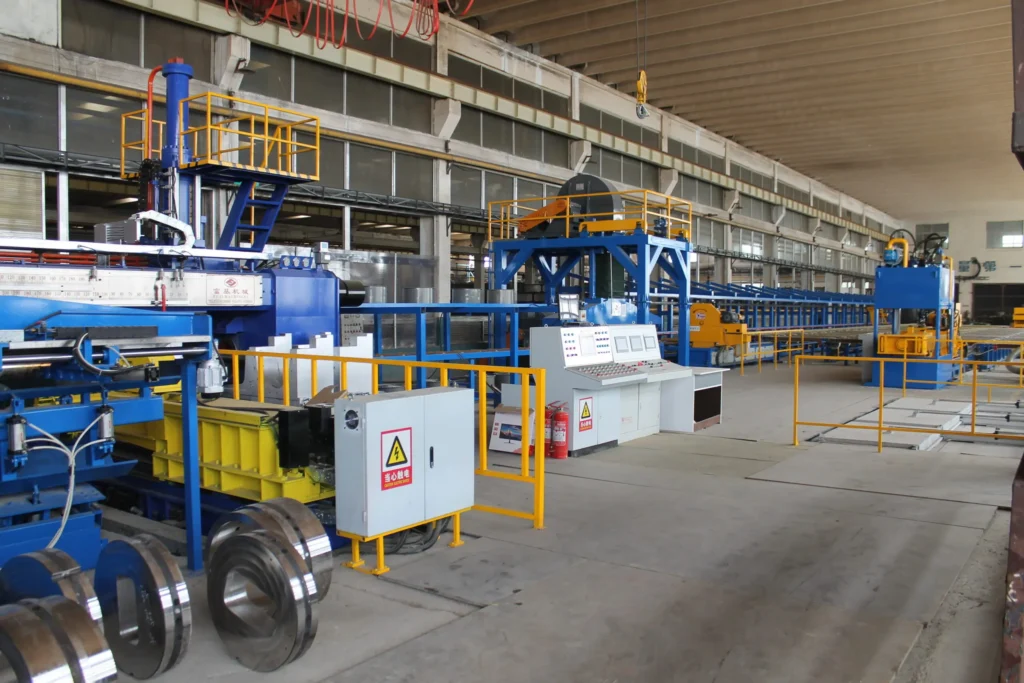
Aluminum extrusion is a hot forming process that turns a heated aluminum billet into a long profile with a constant cross-section. A hydraulic press pushes the softened metal through a shaped steel die. After the profile leaves the die, controlled cooling, stretching, cutting, and aging prepare it for finishing, machining, assembly, or shipment.
That basic description is simple. The engineering decisions behind it are not. Alloy, temper, die design, press capability, quenching, tolerance class, and surface finish all influence whether the finished profile fits the application and remains economical to produce.
This guide explains how the aluminum extrusion process works, how alloys and tempers affect performance, how to specify tolerances, and when a custom die is the right choice. The same principles apply whether the material is called aluminum or aluminium.
What Is Aluminum Extrusion?
Aluminum extrusion is a shaping process in which a solid, preheated billet is forced through a die opening. The die gives the aluminum its cross-sectional shape. Because the die remains unchanged during the press stroke, every length produced from that run shares the same profile geometry.
The process is different from casting and machining:
| Process | How the shape is created | Typical strength of the method |
|---|---|---|
| Extrusion | Heated aluminum is pushed through a shaped die | Efficient production of long, constant-cross-section profiles |
| Casting | Liquid metal fills a mold | Complex three-dimensional shapes, but different material properties and tooling economics |
| Machining | Material is removed from solid stock | Tight local features, but often higher material waste and longer cycle time for long parts |
Extrusion is valuable because it combines the basic shape, alloy, temper, and often functional features in one production step. A profile can include mounting slots, screw bosses, channels, flanges, and stiffening ribs that would otherwise require separate parts or secondary operations.
The Extrusion Process Step by Step
Setup varies by plant, alloy, press, and profile, but a conventional direct extrusion line follows the same sequence.
1. Billet preparation and alloy selection
The billet is a cast aluminum log cut to the required length. Its chemistry must match the selected alloy. The supplier should be able to connect the finished profile to the billet heat, alloy, and temper records.
2. Billet heating
The billet is preheated in a furnace. According to the Aluminum Extruders Council process overview, aluminum melts at approximately 660 C, while extrusion usually takes place with the billet above 375 C and sometimes as high as 500 C, depending on the alloy. The billet remains solid but becomes soft enough to flow under pressure.
Temperature control matters. If the billet is too cold, the press may struggle to fill the die. If it is too hot, surface quality, dimensional control, and mechanical properties can suffer.
3. Die and press setup
The die is mounted in the press container with supporting tooling. Solid profiles are commonly produced with flat dies. Hollow profiles require a die and tooling system that forms the inside and outside of the section.
The die is not simply a hole cut into steel. Its bearing length, entry angles, ports, mandrel support, and land design all influence metal flow. A well-balanced die helps the profile fill evenly and reduces distortion after it leaves the press.
4. Extrusion
The press ram applies pressure to the billet. The aluminum flows through the die and emerges as a continuous extrudate. Hollow profiles may have weld lines where metal rejoins under pressure; control their location and quality.
Press speed, temperatures, and ram pressure must be balanced because each affects surface, dimensions, and properties.
5. Quenching and cooling
The still-hot profile is cooled at a controlled rate. For heat-treatable alloys, the cooling step is part of the metallurgical process, not just a way to make the profile safe to handle. A cooling rate that is too slow or uneven can reduce the properties obtained during aging.
Uneven cooling can also create internal stress and distort the profile after cutting.
6. Stretching, cutting, and aging
The profile is stretched to improve straightness and relieve some residual stress. It is then cut to length. Heat-treatable alloys may be aged in an oven or, in some cases, naturally aged at room temperature.
After aging, the profile can be anodized, coated, machined, bent, welded, assembled, or packed. Plan these steps before production because each one can affect the final part.
Alloys and Tempers Used in Extrusion
The AEC alloy and temper overview notes that the 6xxx series is the most popular extrusion alloy class because it offers a useful balance of strength, corrosion resistance, machinability, weldability, and formability.
Two common choices are:
- 6063 for architectural, decorative, and many general-purpose profiles where surface finish and extrudability matter.
- 6061 for structural, industrial, and machined parts that need higher strength and better machining characteristics.
The alloy name is only half of the specification. Temper describes the thermal or mechanical treatment that determines strength and hardness. Common extrusion tempers include:
- T4: solution heat-treated and naturally aged.
- T5: cooled from an elevated temperature and artificially aged.
- T6: solution heat-treated and artificially aged.
A complete designation such as 6063-T5 or 6061-T6 tells the supplier both the chemistry and the expected condition. If the drawing lists only the alloy, the quotation may be based on assumptions that do not match the application.
Extrusion Tolerances: Which Standard Applies
No single tolerance applies to every aluminum extrusion. Practical limits depend on the feature, profile, alloy, die, press, cooling, and secondary operations.
The AEC tolerance guidance separates industry-standard dimensional tolerances from tighter precision tolerances. It also notes that complex components may require geometric dimensioning and tolerancing because straightness, flatness, and other form characteristics cannot be controlled by a simple plus/minus dimension alone.
A useful drawing usually defines:
- Nominal profile dimensions and wall thicknesses.
- Critical dimensions and their allowable variation.
- Straightness, twist, bow, and flatness requirements.
- Angularity, corner radius, and other form requirements.
- Whether dimensions apply before or after coating or anodizing.
- The governing standard, edition, and tolerance class or table.
- Inspection method and sampling requirements for critical features.
Standards commonly referenced in international projects include the Aluminum Association’s Aluminum Standards and Data, ASTM B221/B221M, EN 755 series standards, and the ISO 6362 series. The drawing should identify the governing document; these standards are not interchangeable.
Apply tight limits selectively. Mark the dimensions that affect fit or function, and allow normal variation elsewhere. If a feature must be controlled after machining, state that on the drawing.
Standard vs Custom Dies: Cost and Lead Time
A standard die is fastest when an existing profile matches the application. Standard T-slot and framing profiles are widely used for machine guards, workstations, and modular structures because they work with established connectors and accessories.
A custom die is usually justified when the project needs:
- A unique cross-section that standard profiles cannot provide.
- Several functions combined into one extrusion.
- Reduced assembly time or part count.
- A specific appearance or interface.
- Repeat production volume that can absorb the initial tooling investment.
Custom die development normally moves through profile review, die design, tooling manufacture, trial extrusion, first-article inspection, correction, and approval.
Die cost and lead time depend on profile geometry, hollow or solid design, tolerance requirements, press size, die design, and required corrections. Quotations should therefore be based on the drawing and order requirements.
The same rule applies to MOQ, production lead time, and warranty terms. These should be confirmed for the specific profile and order rather than treated as a universal number. Before approving a custom die, clarify:
- Who owns the die?
- How will the first sample be approved?
- What revision changes are included?
- How will the die be maintained or replaced?
- Which dimensions are checked in the first-article report?
Surface Finish Options After Extrusion
Finish selection affects appearance, durability, and maintenance. Common options include:
- Mill finish: The natural surface. It suits many industrial uses but may show die lines or color variation.
- Anodizing: An electrochemical oxide layer that can be clear or colored. Thickness and sealing must suit the environment.
- Powder coating: A cured organic coating available in many colors and textures. It is common on exterior profiles.
- Liquid or PVDF-based coatings: Coatings used where color and gloss retention matter. Specify the system for the project environment.
- Mechanical finishes: Brushing, polishing, or blasting create a specific appearance but may alter the surface.
- Wood-grain finishes: Sublimation or coating can imitate wood; durability and color consistency depend on the specification.
The finish must match the service environment. Salt exposure, UV, abrasion, cleaning chemicals, and contact with other metals can all affect performance.
Coating adds thickness. Specify masking where mating surfaces must remain bare. If a critical dimension must remain within tolerance after coating, state whether the dimension is measured before or after finishing.
Quality Checks Buyers Should Request
A useful quality plan is based on risk, not on a generic checklist. High-volume architectural profiles, safety-related industrial profiles, and cosmetic parts should not be inspected in the same way.
For most custom extrusion projects, buyers should request:
- Material traceability: Alloy, temper, billet heat, and certificates.
- First-article inspection: A dimensional report against the approved drawing.
- Form checks: Straightness, twist, bow, flatness, and angularity where relevant.
- Surface inspection: Die lines, scratches, dents, blistering, contamination, and weld lines.
- Mechanical verification: Hardness or tensile tests when required.
- Finish testing: Coating thickness, adhesion, color, gloss, and corrosion.
- Packing and identification: Length, quantity, protection, labels, and lot traceability.
The inspection method matters as much as the report. Ask which instrument was used, how many pieces were checked, and whether the sample represents the production run. If a critical dimension cannot be measured reliably, agree on the fixture or method before the first production order.
We also recommend confirming the quality control process and the inspection documents required for your market before the order is released.
FAQ
Is aluminum extrusion the same as casting?
No. Extrusion pushes solid, softened aluminum through a die to create a constant cross-section. Casting pours molten metal into a mold to create a shape. The two processes have different tooling, material behavior, and design rules.
Which aluminum alloy is best for extrusion?
There is no universal best alloy. The 6xxx series is widely used because it balances strength, corrosion resistance, formability, and finish. 6063 is common for architectural profiles, while 6061 is often selected for structural and machined applications. The final choice should be based on load, environment, fabrication, and finish.
What tolerance can an aluminum extrusion hold?
It depends on the dimension, profile, alloy, die, process, and the standard named on the drawing. Industry-standard tolerances and tighter precision tolerances may both be available, but critical features should be identified and confirmed with the extruder. More detail is available in our aluminum extrusion FAQ.
When should I choose a custom die?
Choose a custom die when no standard profile meets the functional or assembly requirement, or when one extrusion can replace several parts. The decision should compare tooling cost, minimum order, production volume, machining, and assembly savings.
Next Step: Discuss Your Profile
Start with a clear drawing and shared expectations. Include alloy and temper, quantity, application, environment, finish, critical dimensions, inspection, and downstream operations.
Explore custom aluminum extrusion profiles for architectural, industrial, structural, and application-specific geometries. For architectural programs, start with architectural aluminum extrusion profiles. For industrial programs, start with industrial aluminum extrusion profiles, then review custom aluminum extrusion profiles for industrial applications and industrial structural aluminum profiles.
Send your drawing and requirements to discuss your extrusion project. We can review the profile, alloy and temper, die requirements, tolerances, finish, and inspection plan before quotation.