


Introduction: Aluminum as a Modern Industrial Material
Aluminum is one of the most widely used non-ferrous metals in modern manufacturing and construction. Due to its low density, excellent corrosion resistance, good thermal and electrical conductivity, and versatile processing characteristics, aluminum has become an essential material in architectural systems, transportation, industrial equipment, electrical applications, and decorative products.
Unlike steel, aluminum naturally forms a thin, protective oxide layer when exposed to air. This layer helps resist corrosion under many environmental conditions. Aluminum can also be alloyed with elements such as magnesium, silicon, manganese, copper, and zinc to achieve different combinations of strength, formability, weldability, and durability.
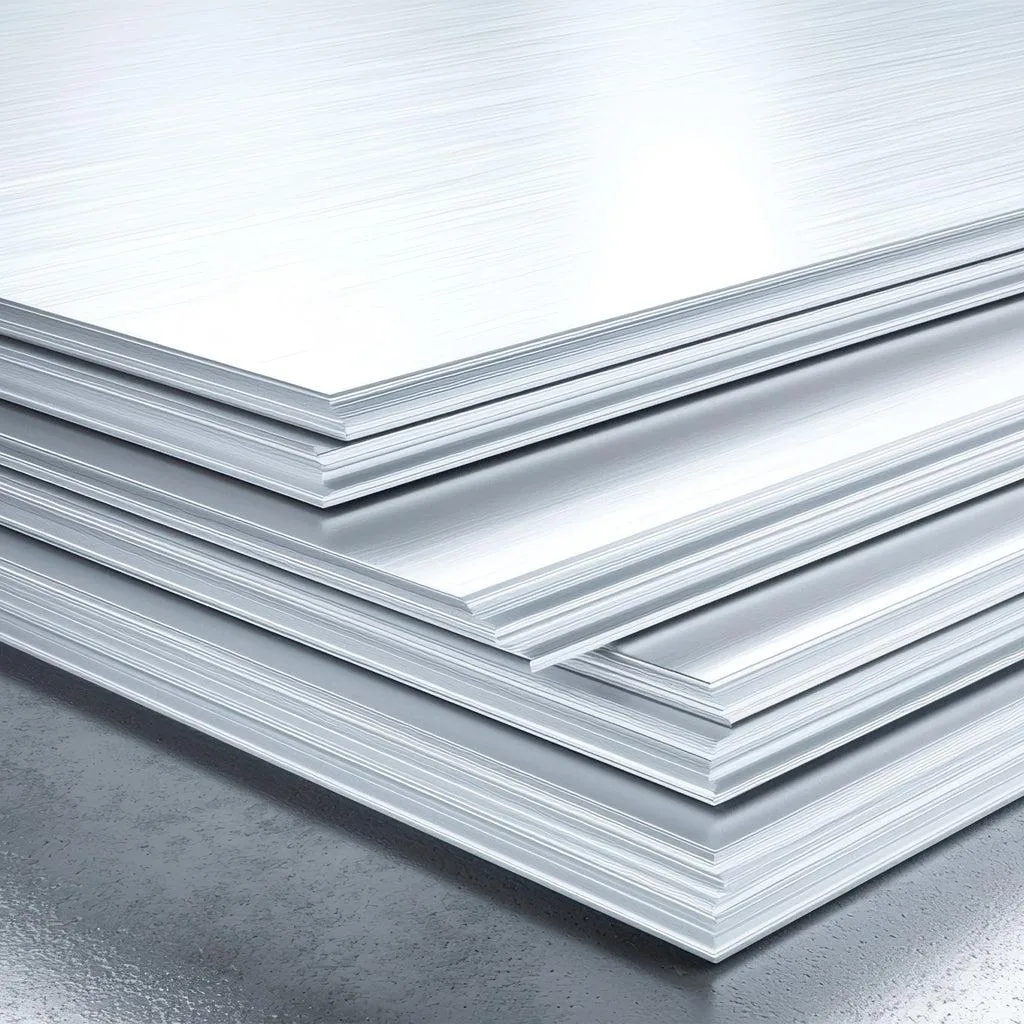
For the construction industry, aluminum sheets and plates are particularly valuable because they combine relatively low weight with design flexibility and an attractive metallic appearance. They are commonly used in curtain walls, façade cladding, roofing systems, ceiling panels, partitions, decorative screens, and customized architectural components.
However, a finished aluminum plate is not produced through a single operation. Its final performance depends on a carefully controlled sequence of raw-material preparation, metal extraction, alloying, casting, rolling, heat treatment, surface finishing, and quality inspection.
Understanding the complete aluminum plate manufacturing process helps buyers and project engineers make better decisions regarding material grades, product specifications, surface quality, and long-term performance.
1. Raw Material Preparation: From Bauxite to Alumina
The production of primary aluminum begins with bauxite, a naturally occurring ore containing aluminum-bearing minerals. Bauxite is mined, crushed, and processed to extract alumina, or aluminum oxide (Al₂O₃).
The principal industrial refining method is the Bayer process. Crushed bauxite is treated with a heated sodium hydroxide solution under controlled pressure. Aluminum-bearing compounds dissolve into the solution, while many insoluble impurities are separated as residue, commonly known as red mud.
The clarified solution is then cooled and seeded to encourage aluminum hydroxide precipitation. The precipitated material is washed and calcined at high temperatures to remove chemically combined water, producing alumina powder suitable for smelting.
The purity of alumina is important because unwanted impurities can affect the quality and consistency of the final aluminum metal.
2. Primary Smelting: Converting Alumina into Aluminum Metal
Alumina cannot be economically converted into aluminum metal by ordinary melting. Instead, manufacturers use the Hall–Héroult electrolytic process, the established industrial method for primary aluminum production.
In an electrolytic cell, alumina is dissolved in a molten electrolyte primarily composed of cryolite. A strong direct electric current passes through the cell, separating aluminum from oxygen. Molten aluminum collects at the bottom and is periodically removed.
This stage is particularly energy-intensive. According to the International Aluminium Institute (IAI), modern industry reporting tracks electricity consumption specifically for the electrolytic smelting stage, including rectification and associated smelter operations.
Published technical literature commonly reports electricity consumption in the approximate range of 13,000–15,000 kWh per metric tonne of primary aluminum, although actual performance varies by facility, technology, and reporting boundary.
Because of this high energy requirement, electricity sourcing and smelter efficiency are major factors in the environmental footprint of primary aluminum.
3. Alloying and Casting: Establishing the Required Material Properties
After smelting, molten aluminum is transferred to holding or casting furnaces. Depending on the intended application, manufacturers may add controlled quantities of alloying elements to obtain the required chemical composition.
Different alloy families offer different performance characteristics. For example, 1xxx-series aluminum is valued for its high aluminum content and corrosion resistance; 3xxx-series alloys are widely used where formability and corrosion resistance are important; 5xxx-series alloys offer useful strength and corrosion resistance; and heat-treatable 6xxx-series alloys are widely used in structural and architectural applications.
The molten metal is sampled and tested to verify its chemical composition before casting.
For flat-rolled products, the metal is generally cast into large rectangular slabs or sheet ingots. Casting conditions must be carefully controlled to minimize inclusions, porosity, segregation, and other defects.
The resulting slab provides the starting material for the production of aluminum sheet and plate.
4. Homogenization and Hot Rolling: Forming the Aluminum Plate
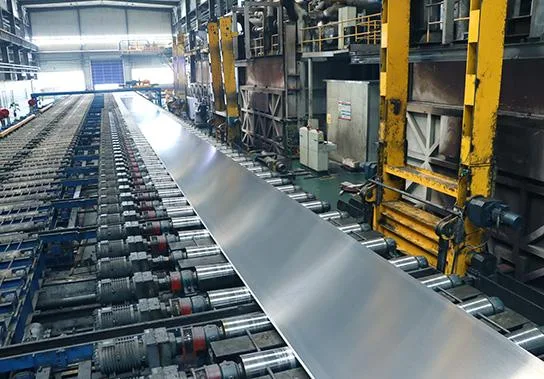
After casting, slabs may undergo surface scalping to remove imperfections and homogenization heat treatment to reduce chemical segregation and improve the consistency of the material.
The slab is then reheated to a suitable rolling temperature and passed through heavy rolling mills. Repeated rolling reduces its thickness while increasing its length and producing a more uniform cross-section.
Hot rolling is essential for transforming a thick cast slab into a flat-rolled product. The rolling schedule, temperature, reduction per pass, and cooling conditions influence the material’s microstructure and subsequent processing behavior.
Depending on the required product, the hot-rolled material may be supplied as plate or transferred to further processing.
For thick aluminum plate, additional stretching or stress-relieving treatments may be required to improve dimensional stability and reduce residual stresses, particularly in applications requiring precise machining.
5. Cold Rolling: Achieving Accurate Thickness and Surface Quality
For thinner aluminum sheets, cold rolling is commonly performed after hot rolling. The material passes through rolling mills at or near room temperature, reducing its thickness and improving dimensional accuracy and surface finish.
Cold rolling can produce a smooth, consistent surface suitable for architectural cladding, decorative panels, appliance housings, and precision fabrication.
The degree of cold reduction also affects mechanical properties. As deformation increases, the material generally becomes harder and stronger but less ductile. Intermediate annealing may therefore be used to restore formability before further reduction.
The appropriate rolling and annealing schedule depends on the alloy, target thickness, temper, and intended end use.
6. Heat Treatment and Surface Finishing
Not all aluminum alloys require the same heat-treatment process. Heat-treatable alloys may undergo solution heat treatment, quenching, and artificial aging to achieve specified mechanical properties. Other alloys may rely primarily on cold working and annealing to obtain their required temper.
Once the desired material condition has been achieved, the aluminum sheet or plate may undergo several finishing operations, including:
- Cutting and leveling: Producing specified dimensions, improving flatness, and removing unwanted edges.
- Anodizing: Creating a controlled oxide layer to enhance surface durability and provide decorative finishes.
- Powder coating: Applying a colored protective coating for architectural and industrial applications.
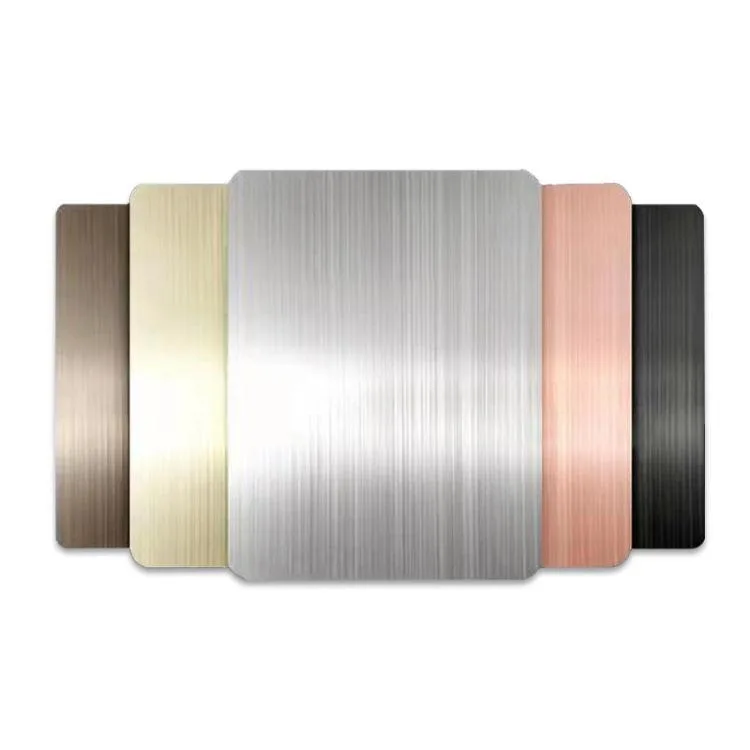
- Brushing and polishing: Producing directional textures or smoother, more reflective surfaces.
- Protective filming: Applying temporary film to help prevent scratches during fabrication, handling, and transportation.
The selected finishing process should be compatible with the alloy, service environment, fabrication method, and visual requirements of the project.
7. Quality Inspection, Packaging, and Delivery
Quality control is essential throughout aluminum manufacturing rather than being limited to the final inspection.
Typical checks include chemical composition, thickness, width, length, flatness, surface appearance, mechanical properties, and temper verification. Depending on the product and application, inspection may also include ultrasonic testing, dimensional mapping, coating-thickness measurements, or other specialized examinations.
Finished products are identified and packed according to customer requirements. Protective interleaving, surface film, moisture-resistant wrapping, and suitable pallets or crates can help prevent damage during storage and export transportation.
For construction projects, buyers should verify the alloy designation, temper, applicable product standard, dimensional tolerances, surface treatment, and inspection documentation before placing an order.
Conclusion: Manufacturing Precision Determines Product Performance
The aluminum plate manufacturing process is a multi-stage industrial process that combines chemical refining, electrolysis, metallurgical control, rolling technology, heat treatment, and surface engineering.
Every stage contributes to the final product’s quality. Appropriate alloy selection establishes the potential performance of the material, while controlled rolling and heat treatment determine its mechanical condition. Surface finishing and rigorous inspection then help ensure that the product meets the functional and aesthetic requirements of its intended application.
For architects, contractors, manufacturers, and international buyers, understanding the production process provides a practical foundation for evaluating aluminum suppliers and selecting materials that balance performance, appearance, service life, and cost.
As construction increasingly emphasizes lightweight structures, durable finishes, efficient fabrication, and recyclable materials, properly specified aluminum sheets and plates will continue to play an important role in modern building design and industrial manufacturing.
Industry Data: Key Figures in Aluminum Production
The following table summarizes published industry information and established engineering reference values. These figures provide context for the production process; they are not specifications for every aluminum grade or factory.
| Parameter | Reference value | Significance |
|---|---|---|
| Primary aluminum smelting electricity consumption | Approximately 13,000–15,000 kWh/t | Illustrative industry range reported in technical literature |
| Aluminum density | Approximately 2.70 g/cm³ | Explains aluminum’s lightweight characteristics |
| Aluminum oxide melting point | Approximately 2,050°C or higher, depending on material and conditions | Helps explain why direct melting of alumina is impractical |
| Typical aluminum plate slab mass | Can exceed 20 metric tonnes | Large slabs are used in industrial plate rolling |
| Typical homogenization temperature for many rolled aluminum alloys | Approximately 480–580°C | Depends on alloy composition and process design |
Sources: International Aluminium Institute, Primary Aluminium Smelting Power Consumption; The Aluminum Association, Primary Production 101 and Processing 101; European Commission Joint Research Centre, Production of Primary Aluminium; published technical literature on aluminum hot rolling.